Categories
book

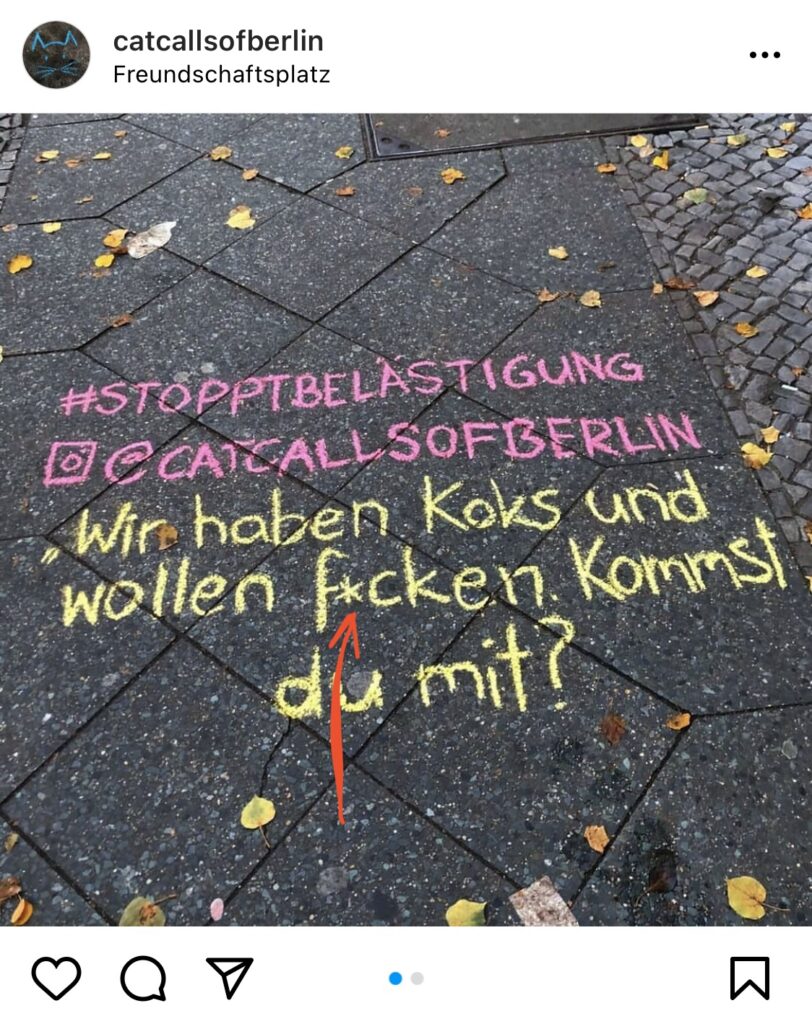
“Cat calls of Berlin”, the “Chalk art movement against street harassment”

Gabriela Parra Sánchez
11.01.2022

1. Introduction of “Cat calls of Berlin”:

It has been shown that social media, and mostly an app like instagram, is a wide space with questionable boundaries, in which a lot of bullying and harassment can happen, but also it can be the platform where one can report acts of hate and abuse – towards women and LGBTQ+ people, in the majority of the cases.

In November I was talking to a friend that lives in Berlin about my COMPLAINT!ivism? course, the topics we discuss about, the book we are getting our input from and the learnings I get from reading the blog. I told him about the second task and he sent me this instagram account and said: “give it a look, it might be of your interest.”

I am talking about “Cat calls of Berlin” @catcallsofberlin. Forehand I didn’t know what “catcalling” meant, it sounded like a very tender name to me for such an act.

It is “the act of shouting harassing and often sexually suggestive, threatening, or derisive comments at someone publicly”. (1) But still it was not clear enough to me why is it called catcalling?:

“It’s called “catcalling” because it’s associated with those verses that are usually made to call cats, and bring them closer”. (2).

According to this the name of the account “Cat calls of Berlin” exposes the sexual threatens and comments that people have received in the streets of Berlin, and as they state it on their instagram biography, it is a Chalk art movement against street harassment.

It is an initiative carried out both digitally and analog on the streets from multiple cities, and its aim is to expose different harassment experiences through comments. People first share their testimonies anonymously through instagram direct messages, then the team writes a piece of the testimony on chalk nearby the place it happened and then post a photo of it, in addition to a screenshot of each testimony.

At first, even though I didn’t understand exactly what every message in every picture meant, I could imagine the heaviness of emotion every post carries. Not only because of the remembrance of that specific situation in which the victims were put into, but also because out of this exercise, victims are able to build empathy and advise others which places they were harassed in. This allow women, and everyone, to know in advance that something like that happened just right there, in that specific street, corner, whatever it was.

2. Deeper analysis of “Cat calls of Berlin” and its impact:

Although this movement was born in NYC, I wanted to focus on the Berlin’s account for some reasons:

Mainly because it is a city I frequent a lot, and even though I recognise I am in a more open and advanced culture towards the one I was born in, one may think that this type of comments or abuses are not that common in here, but through this account we can evidence that it has nothing to do with the place, its the people that provide this scenarios.

Reading these comments has reminded me the times I have been exposed to these types of comments; because of the way I was dressed, because of walking really late by my own, or even because I was talking in Spanish and just because I am latina makes them think I like to be exotized or approached in a vulgar/sensual way.

I haven’t faced such a comment in Berlin until now, but it triggers me that it can happen to me any day and I don’t know what to answer back nor how to react. Language is still a struggle to me and I will be surely shocked.

It was also sad to read many testimonies from really young girls ages 12, 13… To see how vulnerable women are still on the streets but hopefully there will always be someone that empaths with your experience and maybe they’ll make art out of it to encourage others and show they are not alone. Testimonies in the page oscillate from comments like: “Ey Puppe, willst du was machen?” “Hey sweety, do you wanna do something? (Posted on the 20.10.2021)”, to “Den Arsch will ich an mir spüren” “I want to feel that ass on me” (Posted on the 07.06.2019).

On one side, in these cases the victims are attacked by people they might have never seen before or even won’t see anymore. On the other side, the testimonies that appear in Ahmed’s book “Complaint” the victims and aggressors had already stablished- relationships such as: professor-to-student, boss-to-worker and so on. Which, I reiterate, does not make the experiences any more or less valid, nor traumatic, it is just a comparison to show that no matter the level of relation towards another person, if there is no consent, it is abuse.

In addition, by analyzing some aspects of this movement (which I really value and admire), I realized that the messages are written in chalk on the streets and as is know chalk can be easily erased by rubbing on it, or with the rain as it’s exposed to an open environment. It is not a material that permits that the message stays for a long time or even permanently; though the damages and the trauma are already permanent.

The purpose of the movement is to commemorate this situation even if it is not done justice in its totality, since its purpose is more to condemn this type of events and in a certain way to mortalize these acts in the space in which they were carried out, showing support for the victims. It is not their obligation to make this ‘art’ permanent, but I wonder if the reason for is to be written on chalk has to do with a fear against banning or another type of reason that won’t allow this to continue.

Of course to read this on the streets causes uncomfortableness to the eye and the dignity, but it is necessary to spread the word and the fact that it happens. Perhaps not to everybody, perhaps just to the unlucky ones, just to some unlucky cats.

Furthermore, I noted also that not all messages are written explicitly. It may be due to a restriction given from instagram under its terms in order to make the post available for everyone, or even for keeping respect on the streets, as children may read them. Which also concerns me in a way, because abusers do not have any type of respect while

doing this type of comments and they are always very explicit; but when one gets the chance to expose and denounce it, it has to be narrowed for it to be reached. In a sense, the abuser has freedom, while the victim must restrain herself/themselves.

Here I show two examples of what just was mentioned:

Posted on the 19.12.2021
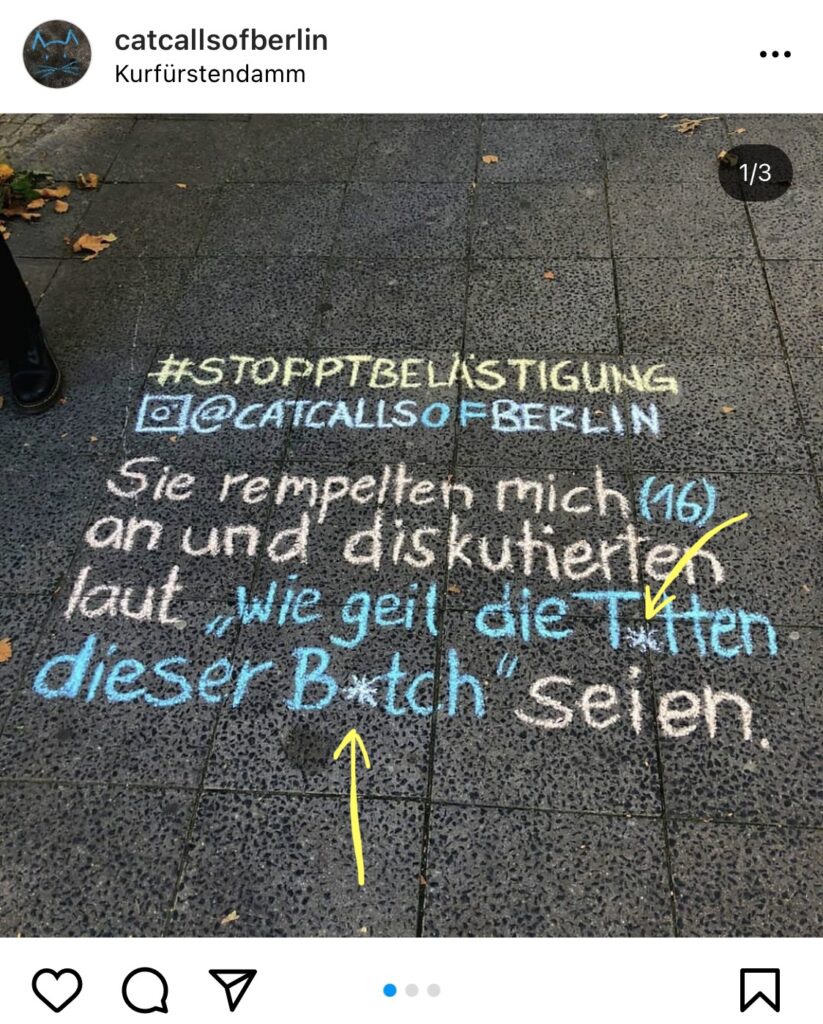
Screenshot of @catcallsofberlin in instagram

Posted on the 04.01.2022

Screenshot of @catcallsofberlin in instagram

3. Conclusions and perspective after this exercise:

These types of initiatives on social media permit the spreading of warnings towards scenarios of this kind (like the ones we were able to read along the lines of “Complaint” by Sara Ahmed), as it instantly catches the eye of the pedestrians and will leave a temporary mark on the space due to the unfortunate events that happened right there. Still, the experienced harassment from the victims will never be fully portrayed and the abusers are not being loudly called nor exposed. Even though abuse happens both indoors or outdoors, in both cases one feels trapped, in presence or in absence of walls.

The “catcalling” is normalized in many specific cliché scenarios: out of a bar, near constructions, mostly near men-crowded places. But this exercise shows that it happens anywhere. There is no guarantee that one can come back home without receiving one catcall in the same day, nor even measure of the types of comments: it does not matter to the abuser if you are a 14, 18 or 25-year-old. They are going to act that manner anyways. There is no respect at all.

“Cat calls of Berlin” contributes to the exposure of harassment and abuse event but still it is not enough because abusers are not exposed fully. You are not given a name, nor a face. It may be an interesting outcome for the followers to be able to give a face to every executer of this disrespectful comments. Probably, it can warn the audience in a more direct way and perhaps it is someone you may know: it can be your neighbour, your teacher, your relative.

———

Invitation:

The movement has surpassed borders and it is possible to find accounts for multiple cities; including: New York, Boston, Brighton, Buenos Aires, Brussels, Rio de Janeiro, etc; and in Germany: Weimar, Bielefel, Bayreuth, Bonn, Bochum, Bamberg among others.

To visit their instagram page: https://www.instagram.com/catcallsofberlin/

To visit their twitter page: https://twitter.com/catcallsberlin

Website of the organisation behind this initiative: https://www.chalkback.org

———

References
1. https://www.merriam-webster.com/dictionary/catcalling
2. https://www.nssgclub.com/en/pills/25878/catcalling-instagram

Categories
complaints thoughts

Manufacturing Defect

I was born with a condition. At 33 years old, I still have one baby tooth. The other one didn’t come because it didn’t feel like it or maybe it had better things to do. This condition does not let me enjoy food like others. This condition made me envious. But who do you complain to when what doesn’t work was already in you? I can’t bite from the front, I have to do it with my right side. Doctors say it’s better to take care of it as much as I can, rather than replace it. But I am hungry to eat with my left side.

Categories
book

CHALK

Allora and Calzadilla are a collaborative duo of visual artists who live and work in San Juan, Puerto Rico.

Jennifer Allora (b. 1974, Philadelphia, USA) and Guillermo Calzadilla (b. 1971, Havana, Cuba)
Since the beginning of their collaborative career in 1995, Allora & Calzadilla have worked in a variety of media to produce a body of work spanning sculpture, photography, performance art, sound and video. Allora and Calzadilla are known for their interactive art pieces in public, often addressing social and political issues and engaging questions of history, geopolitics, and culture.

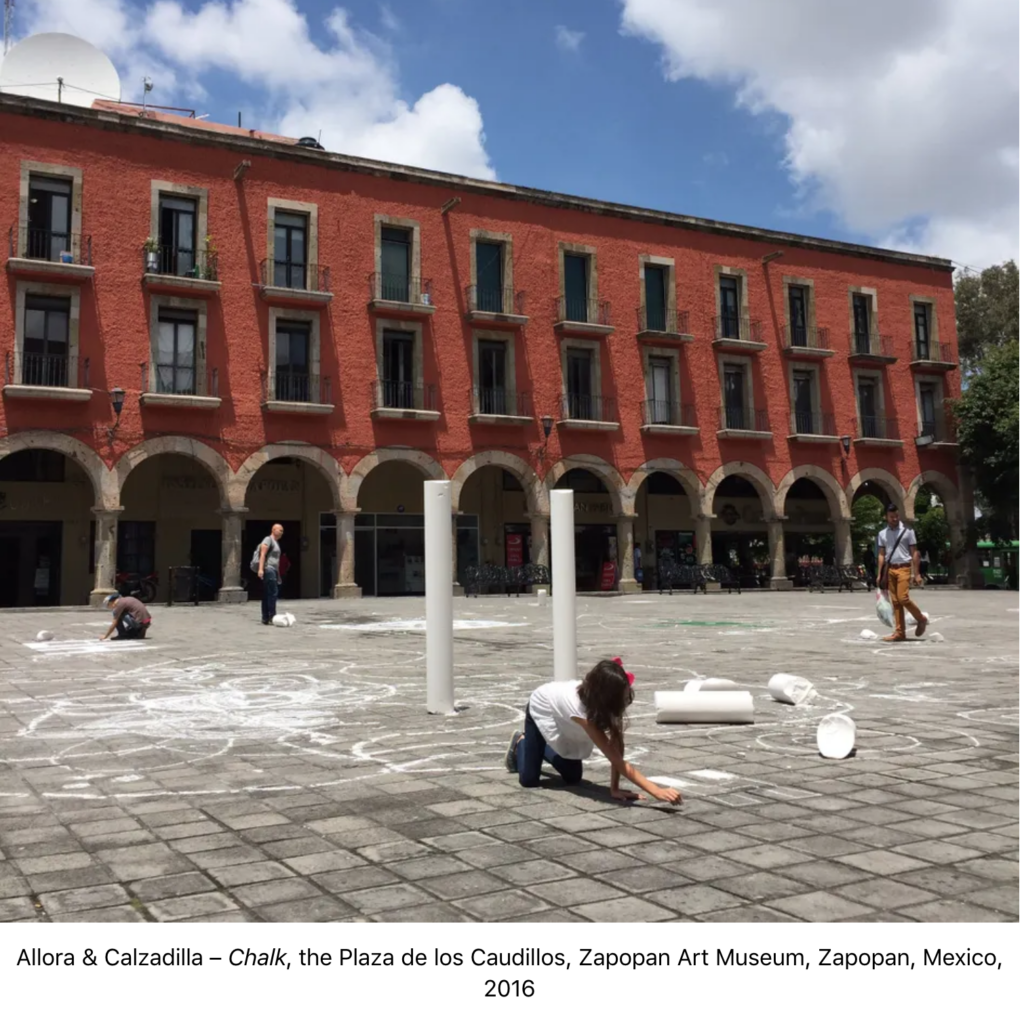
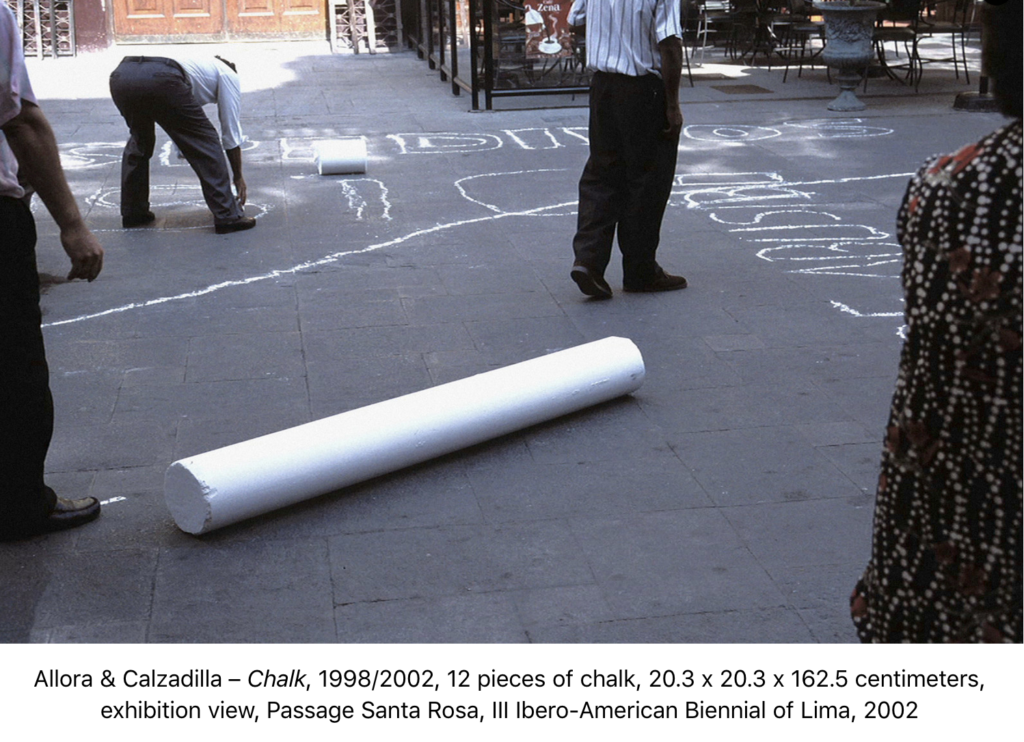
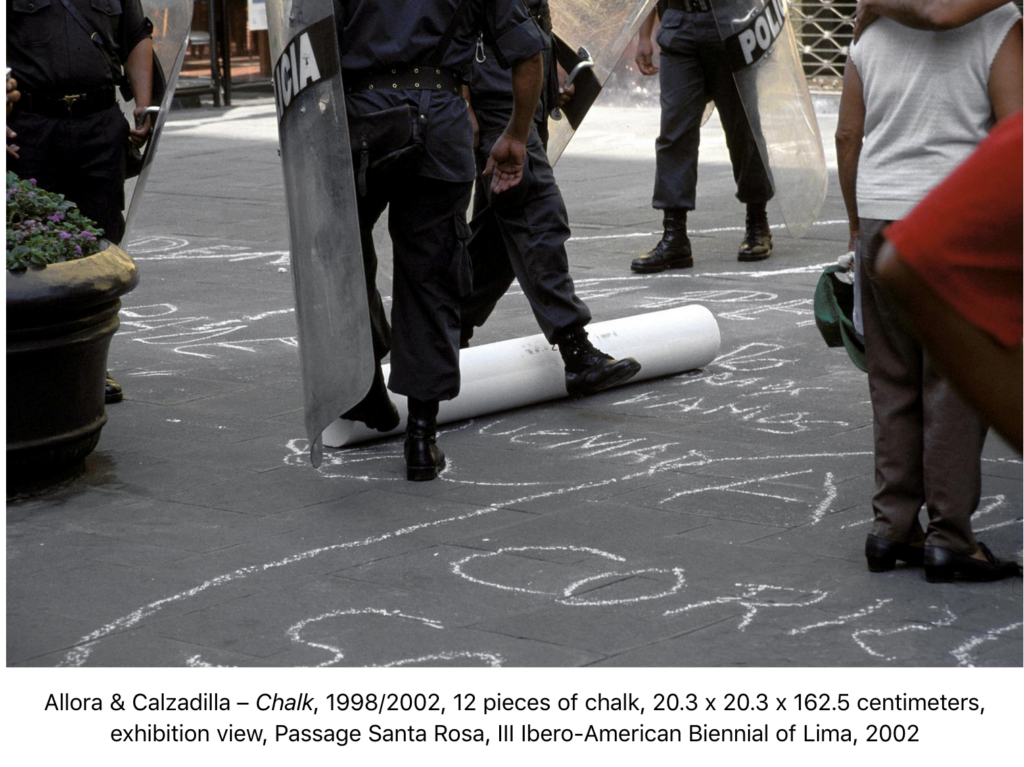
Chalk (1998) is an ongoing art project in which the artists place human-size sticks of chalk – each piece measuring 64 inches in length – in public spaces for passers-by to use as they choose.

Chalk is not a completed project. It has been presented in many cities globally, including Zapopan-Mexico, Boston, Paris, Sydney and New York. This ongoing project was also installed in the central government square in Lima, Peru, to stand as a part of the 2002 Biennial Iberoamericana. With each iteration, the character of the work shifts in response to the locals, social, and political factors

I wanted to share this to broaden the vision of the formats that a collective demonstration can have. I find it interesting to think about the complaint beyond institutional formats. I would like to highlight the simplicity of this piece as a potential for the use of public space as a huge blackboard, an extended canvas on which one can write, sue or complain.

Although the piece is not a specific call to express complaints, on the multiple occasions in which the “agents, executors, pedestrians or participants” have performed, they use the opportunity to express general discontent, complaints with the government, emotional manifestations or political positions. .

I also wanted to show this in relation to the book Complaintivism!, to see explorations of how the complaint can be thought from art, how from the idea of “installation, performance or drawing” the public space can be rethought to share the private issues.

Remarkable the game with the scale. It seems accurate to me, how a device as simple as chalk, with that school connotation that it has, by making it giant, takes on a sculptural dimension that empowers the potential writer. Removing the chalk out of class and placing it into art spaces or streets stands as a chance for the public to share their ideas and enlighten their foils.

Víctor del Oral

Categories
art complaints general thoughts

dIARY OF A sUICIDE

“I’m not going to complain today, because I have wonderful people surrounding me”

14.01.22
Categories
art

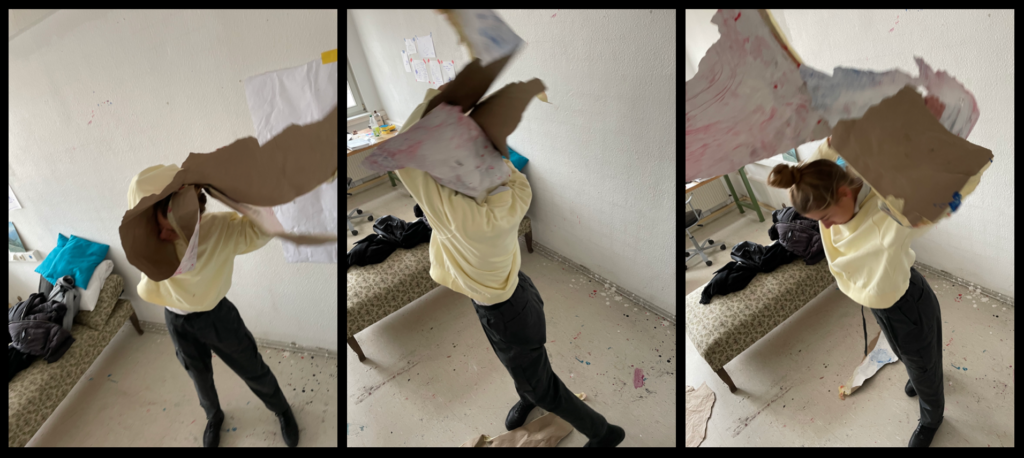
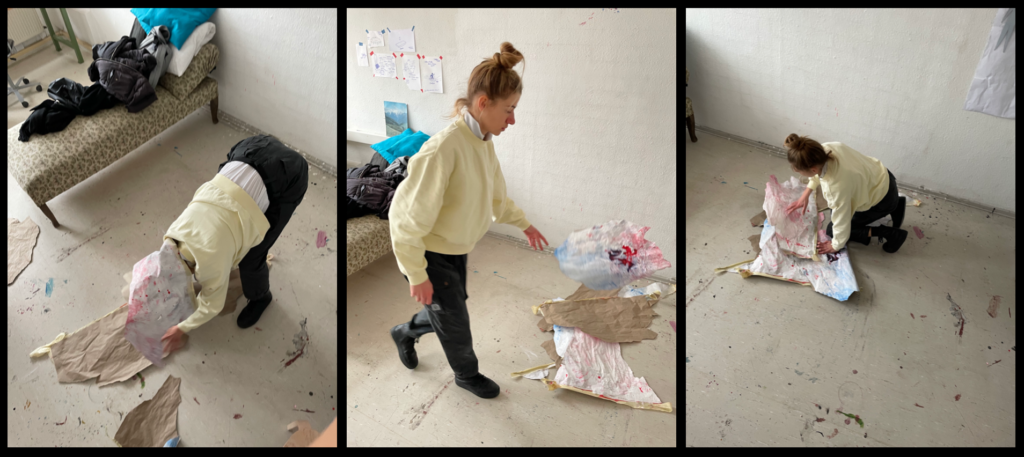
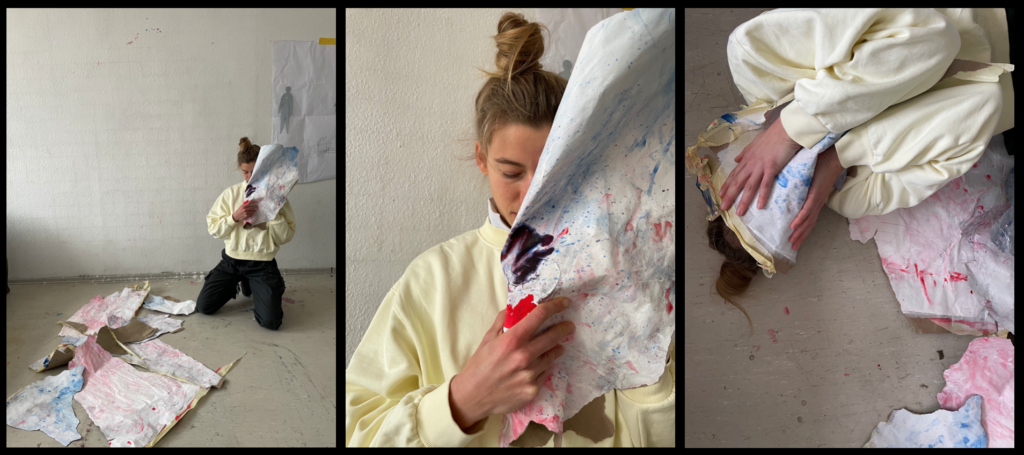
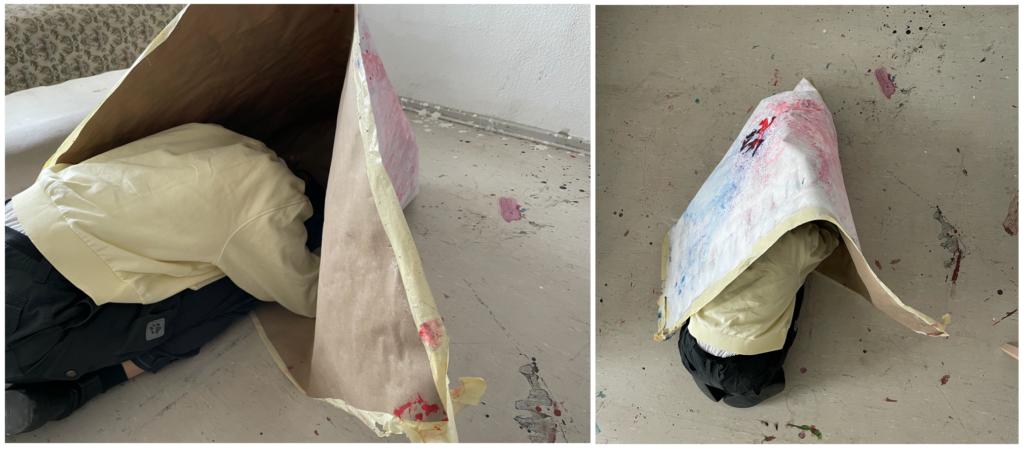
Complaining in Process: Interaction with Painting

Complaining Alphabet: Emotions A-Z.
Recovering during White Period.
Categories
book

Guts as a file

“To file a complaint can also mean to become alienated from the history that led you to complain, an intimate alienation that you feel in your own bodily being” (Ahmad, pg. 42)

How reclaims and complaints interferes in our own bodies?
Mind and body relation have been a topic that has overcome day and day more important, as studies showing their strong interconnection.
Lately I read an article in an online magazine called Mental Health America which says that the intestine coating functions “a second brain”. Both intestine and brain are connected physically by the vague nerve, and chemically by hormons and neutroansmitters. Therefore they are interconnected back and forth. Consequently, the intestine is the main psychosomatic organ. A good mind influences a good intestine functioning and a good intestine functioning conducts to a healthy mind.
When I swallow my complaint my body “resiente” Spanish word that means literally re-feels.
Metaphorically meant that it reacts with pain.
As a matter of fact I have a condition called “inflame intestine” a psychosomatic reaction in the gastrointestinal apparat. It started when I was 20 years old and comes and goes depending on the season. It was triggered by a family crisis, which in that moment was difficult to elaborate through words, with text. So, my body took the work of materializing into a feeling, an uncomfortable body feeling.
Ahmad says our body can be converted into an archive, as a document.
Our whole existence is involved in the process of letting a reclaim out.
In my case, I have learned that when I don´t speak out the situations that bother me, if I don´t “file my complaint” my body resents and reminds me that is important to elaborate this discomfort through speech.
Since my first intestine crisis I started a psychotherapy process, for many years in a row. That helped enormously. That safe space with an objective ear that heard unprejudiced became an effective way to file and convert those life complaints into a document that possible to be analyzed, letting it out of my body as a knit, out from my guts. The possibility to elaborate the difficulties of experience through text.
Although the psychotherapy space is a different institonalized space, and it is not conducive to bringing grievances to any formal process, It helped at that moment to organized the ideas in order to lead them in the future to other spaces of pleading. And certainly to learn how to manage my guts.

Categories
art

Complaining in Process: Painting

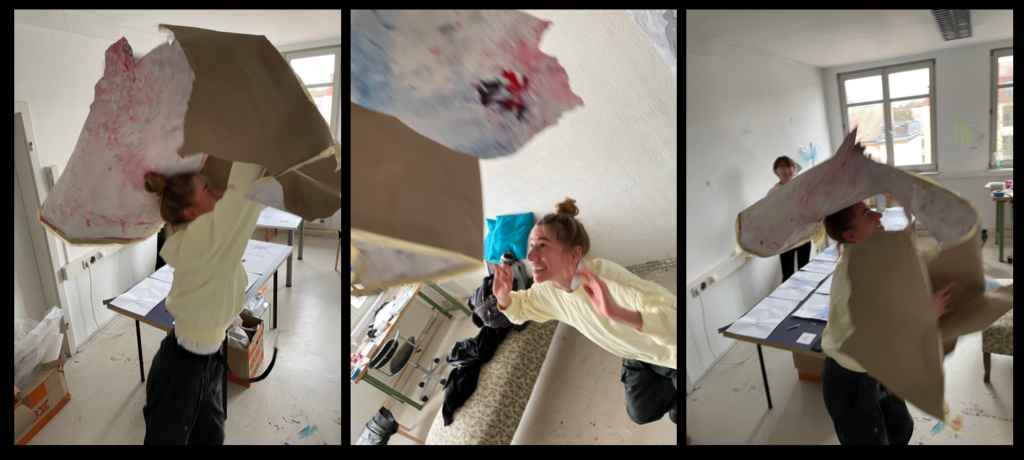
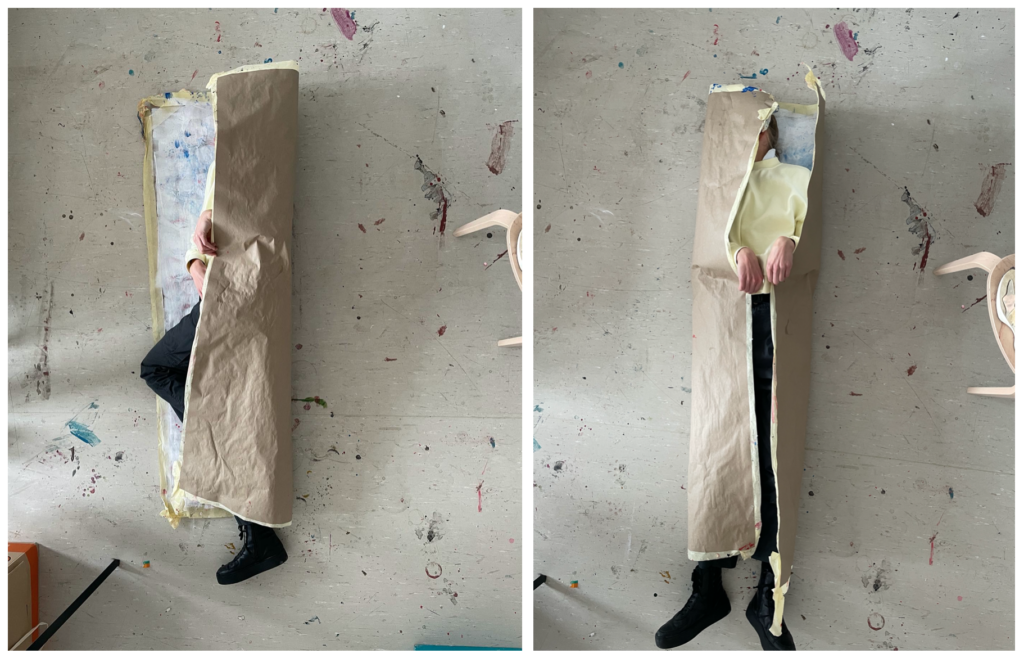
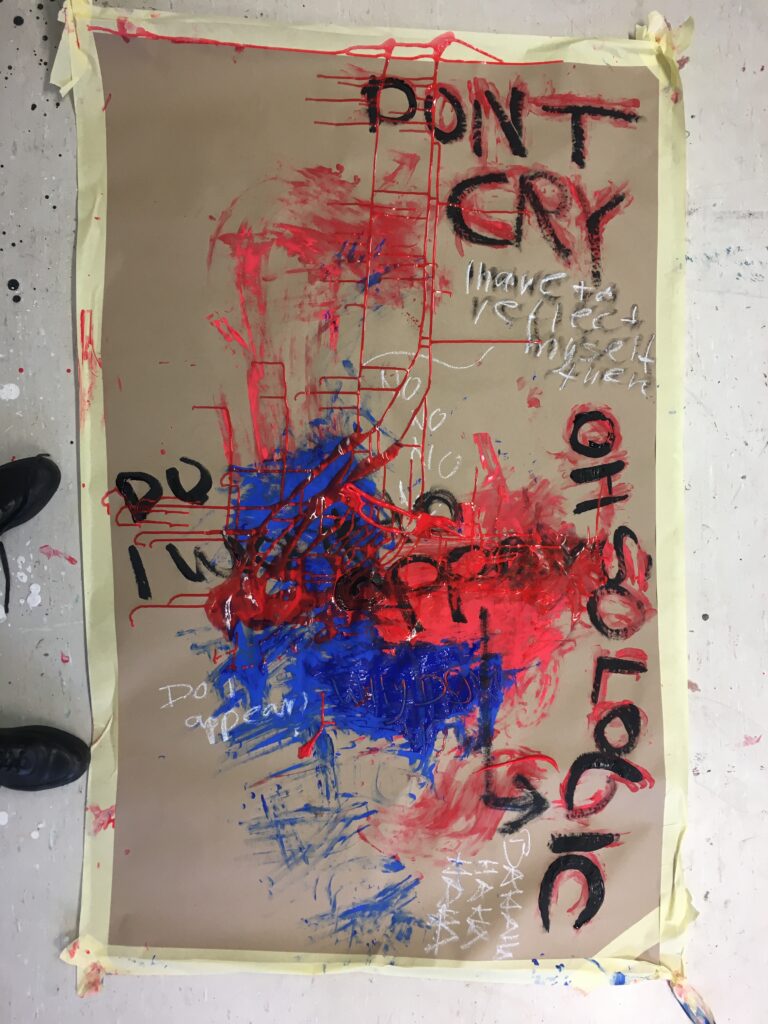
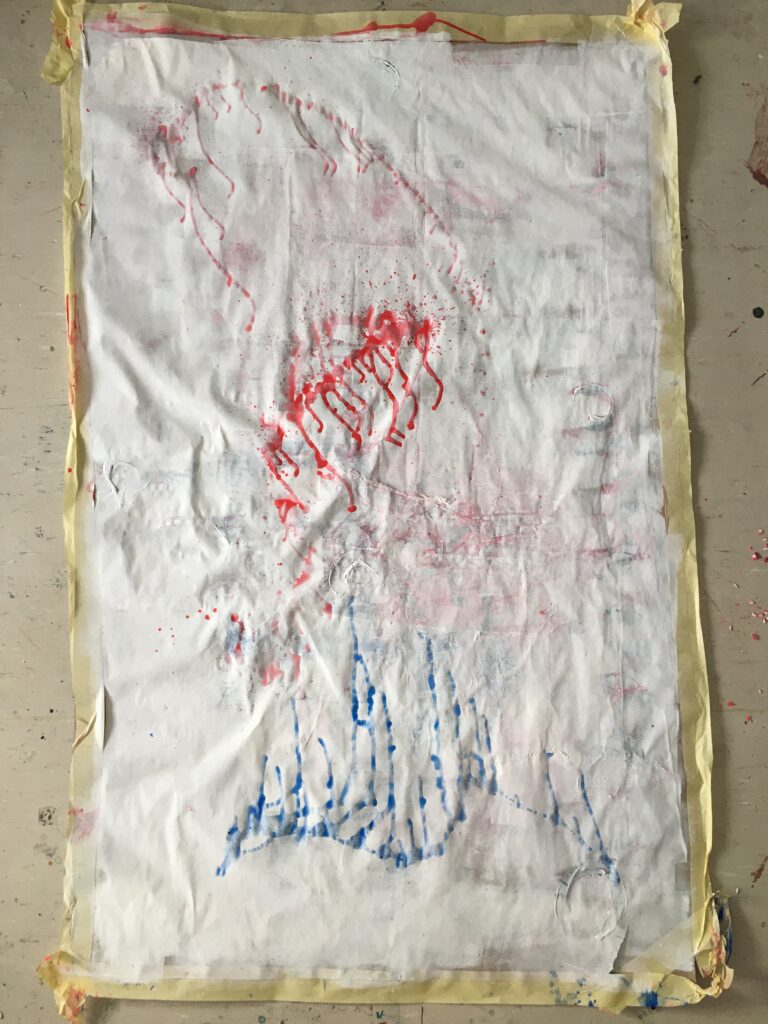
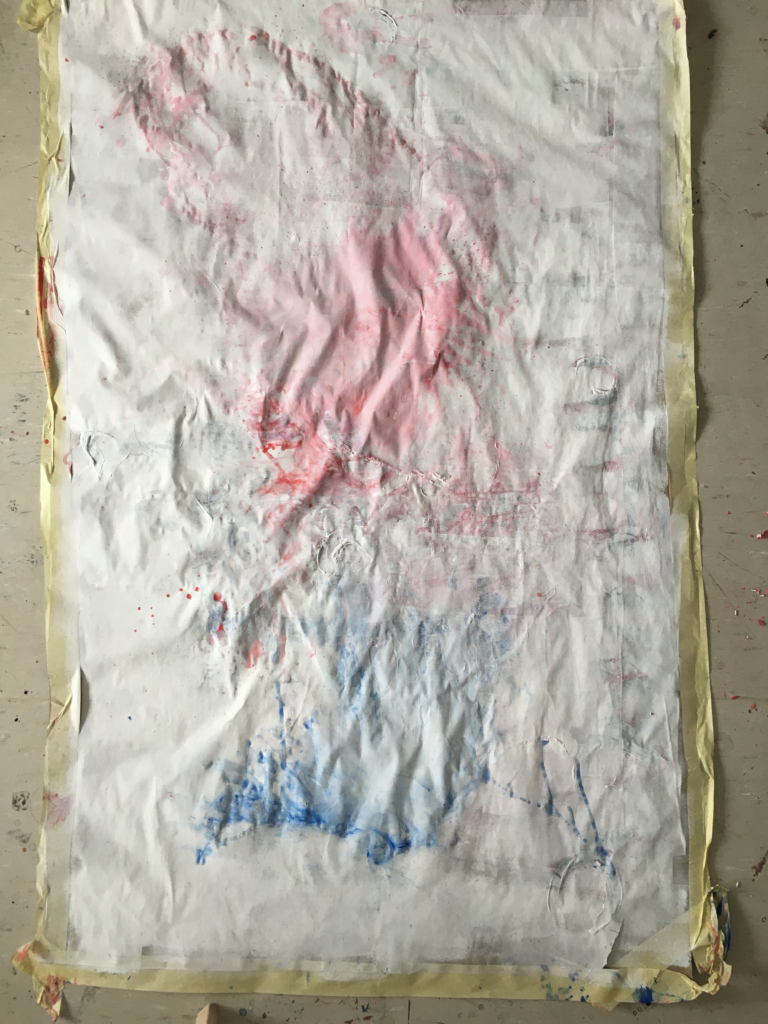
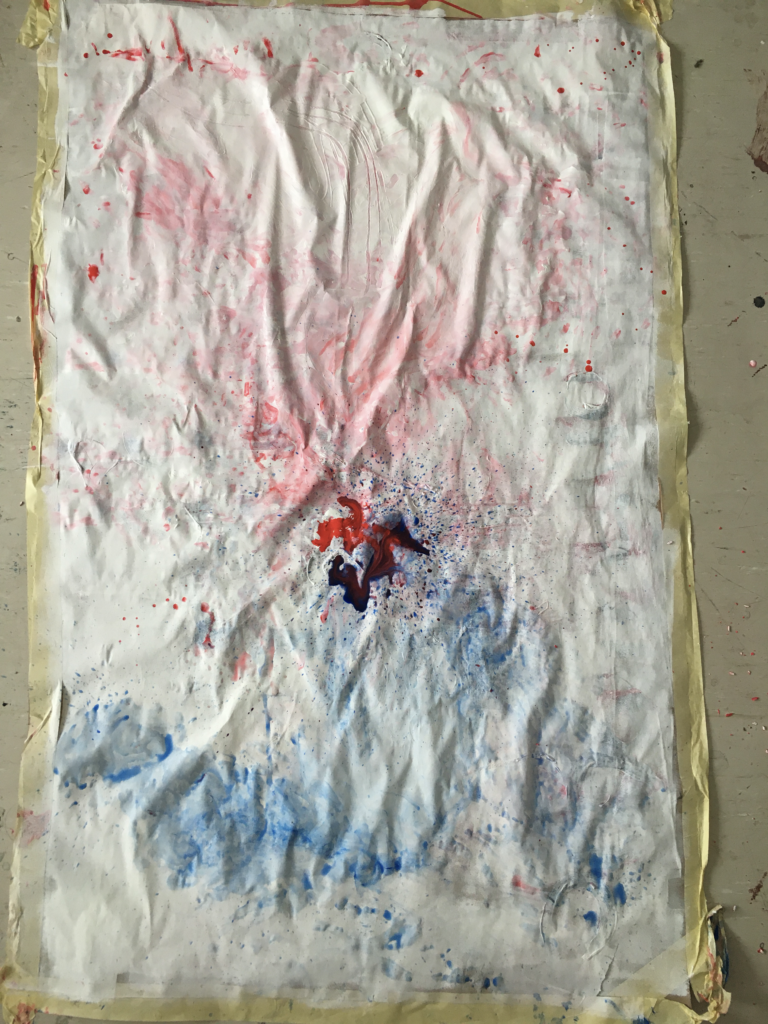
After sharing my personal experience with complaining and having F too close at the same time, I let anger directly bleed on paper. 

First outburst to leave doesn’t feel good, doesn’t feel right. 
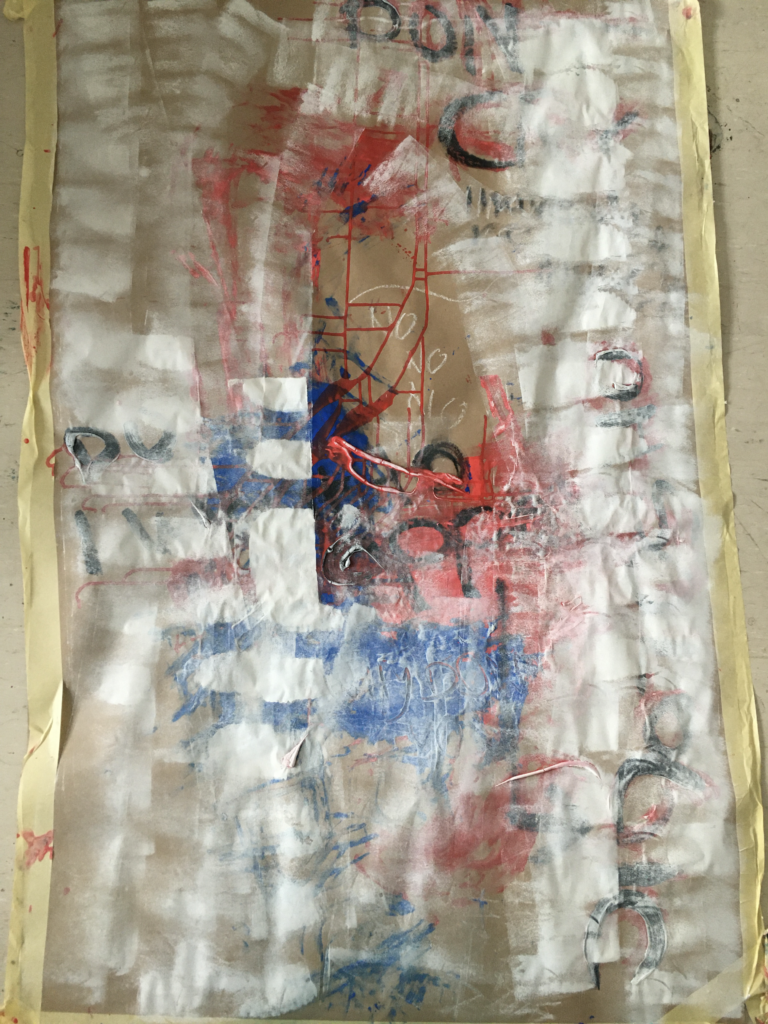
Another layer should calm down outspoken words, should offer time to reflect on them.

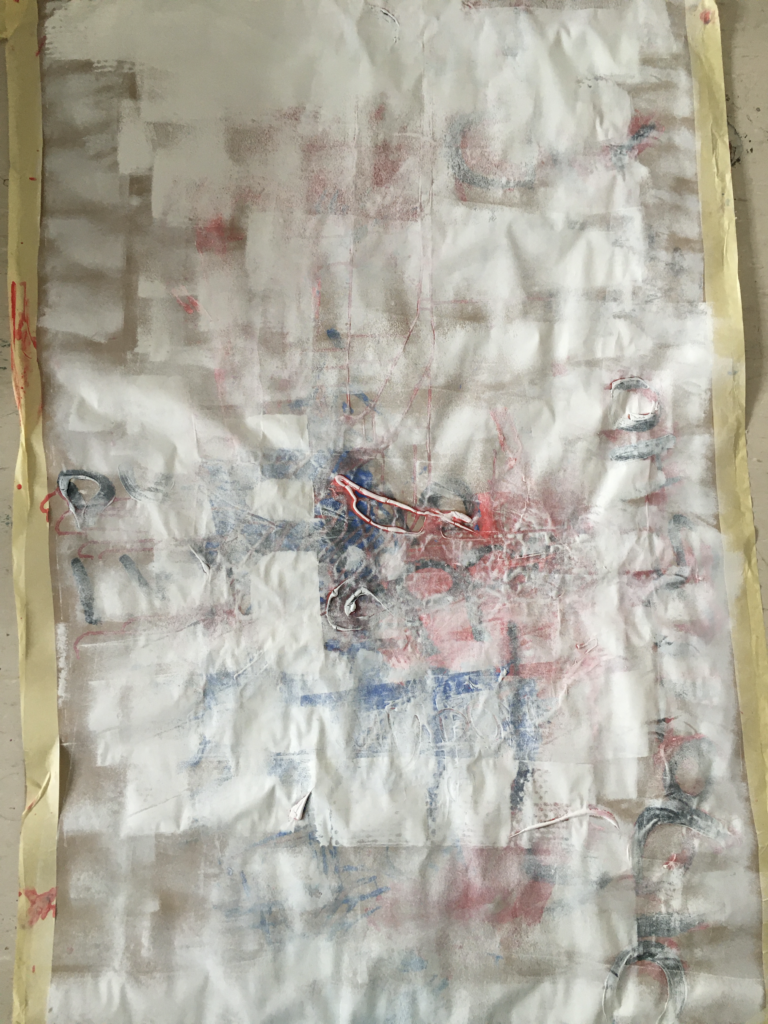
However complaint need time, it will not erase. To cover complaint, to drown it doesnt quite work. The complaint is there no matter how much you put on it.

It gets calmer through times YES, but it still wants to achieve. It is motivated, it is alive, it wants to succeed and it will come out again…

… different this time: slower, with caution based on the history of complaint.

Justice, equality and freedom are things in life we might all want. But how to deal in a system where this is only valid for one? To change the system, to break down borders, to achieve a respectful communication demand work and patience. It means to understand, to explain, to react, to reflect, to act, to react, to reflect, to understand, to explain again -> for justice, equality and freedom. For love and communication, to stay connected and not alone.

However you want to stay connected: Getting to close involves risk for damage. Its a game, a steady negotiation of distance and participation. There is tension to eat each other, to destroy, to fall apart again…

Categories
art

Complaining in Process: Performative Storytelling

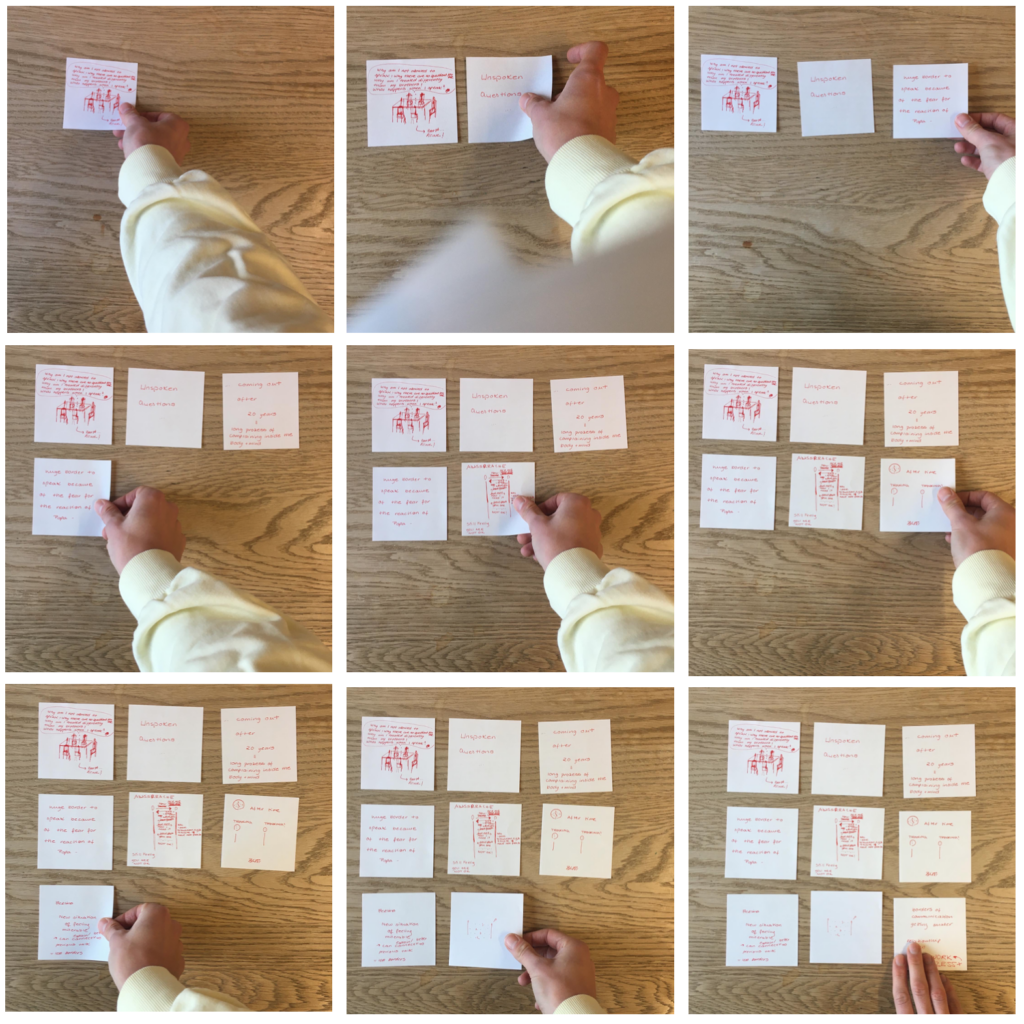
Reading Sara Ahmed’s Book Complaint! let me think of my personal experience with complaining in an institution:family. Ahmed describes how hard it is to get a complaint through within an institution and so I do. 

#complaint#activsm
#saraahmed

Categories
art complaints genre

“There is no future, but at least there is coffee”.

There is no future, but at least there is coffee.
Not the kind of coffee they sell in fancy places.
Not the kind my mother used to make.
There is no future, but at least there are shoes.
Not those comfortable shoes.
Not even uncomfortable ones, but sexy ones.
There is no future, but at least there is music.
The kind that makes me dance, makes me sweat, makes me stink.
There is no future but there is saliva. Of the slippery kind that makes me retch
and the dry kind when there are no more words.
There is no future but at least the printer works.
After ten tries and even though the cartridges were full.

#stopcomplaining

Categories
book

Lützi Bleibt! – Lützerath stays!

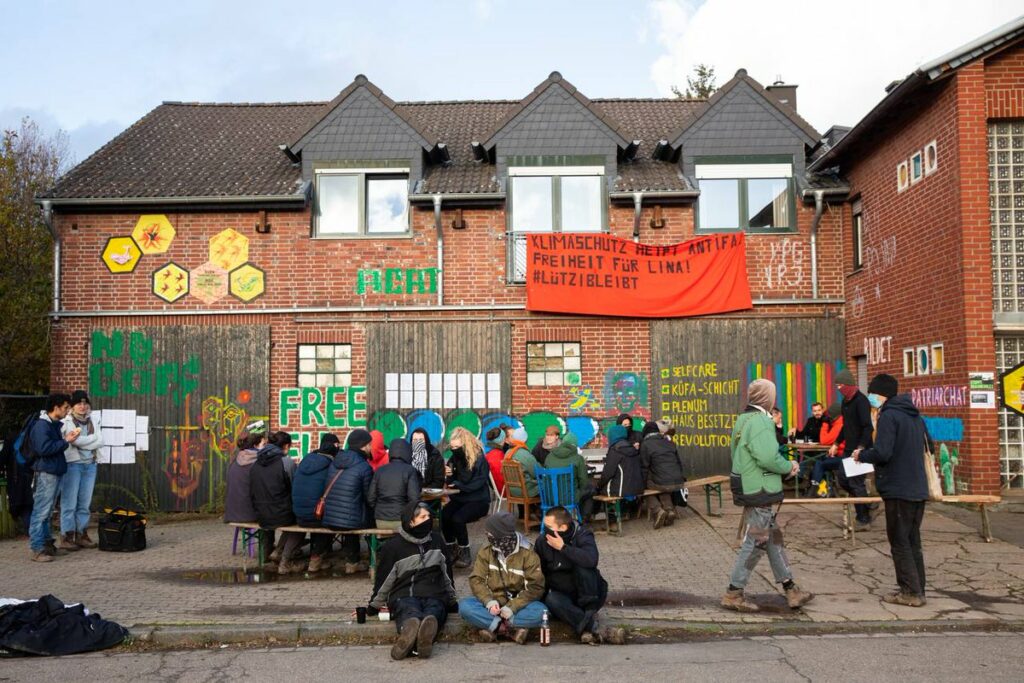
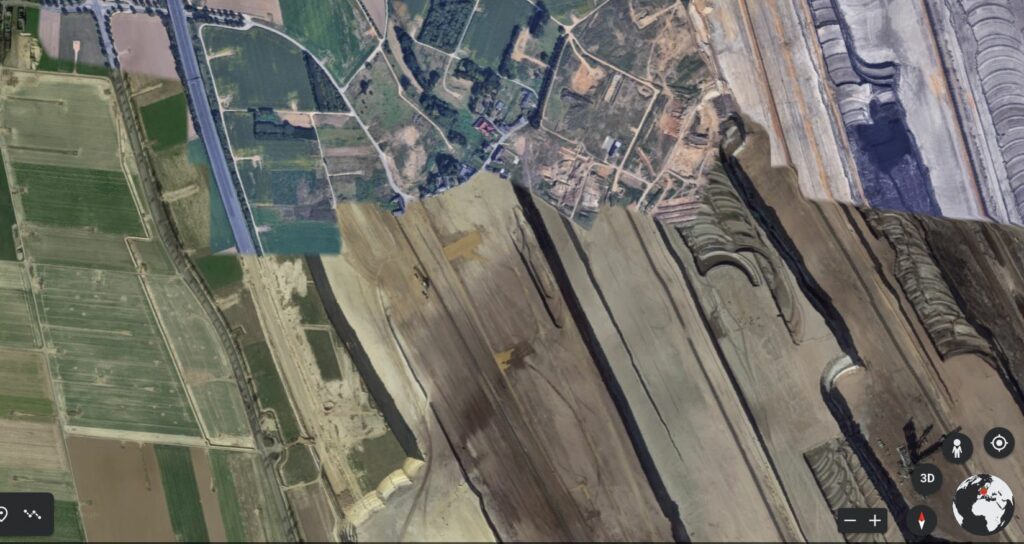
Incredible violence is happening where people are being displaced and places destroied forever. Despite of a climate catastrophy that is already happening the german governments still allows corporations to enlarge open coal mines like the one called “Garzweiler” close to cologne that is one of the largest in Europe. Twelve villages had to be demolished for it in the past, homes, protected monuments, fertile soil, insects and other creatures, roman excavation sites the whole complexity of a peace of Earth taken out by a huge digger. What remains is a incredibly large and deep whole that seems to be empty but that is actually full of complaints and suffer, of ignored voices of protest. There is a fracture on GoogleEarth were the view of 2009 and 2020 meet each other. On the satellite picture we see the village of Borschemich that stopped existing in 2017 and we see at the same time, more that 100 meters below, the ground of the new coal mine. The next village that should fall is Lützerath were only one farmer was able to stay but that is accompanied now by hundreds of squatters that moved into the abandoned houses and selfmade treehouses. They try to amplify not only the complaining voices of those who are affected locally by displacement but also those who are and will suffer from the massive CO2-Emissions of the coal. Lützerath became a fertile space of complaining, of resistance and of the creation of an alternative sphere in opposition to capitalisms extractivism.

Squatted house in the village of Lützerath that is currently under threat of destruction due to enlargement of the coal mine Garzweiler.

The village of Borschenich (satellite image from 2009) that disappeared 2017 and the open coal mine Garzweiler (satellite image from 2020) in Germany near Cologne. Fracture found on GoogleEarth.