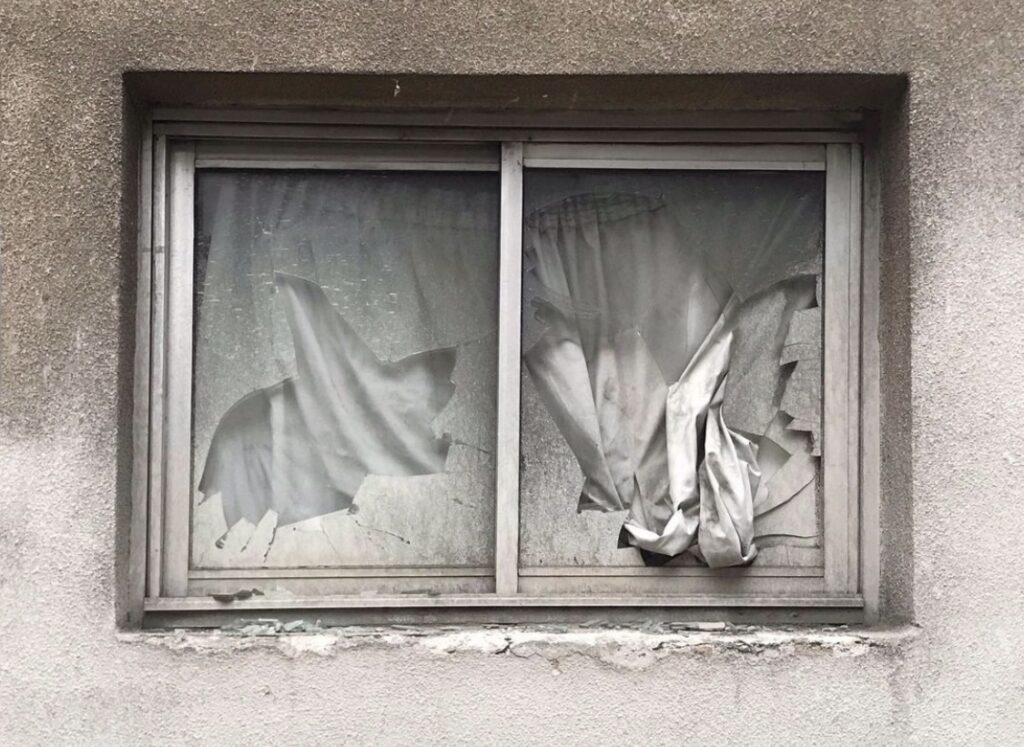
I had to carry a piece of my land and leave to another side. Other side of anything you could imagine.
You cannot imagine the sorrow of this land.
and You don’t have any idea how hard is to leave somewhere this much melancholic.
I had to carry a piece of my land and leave to another side. Other side of anything you could imagine.
You cannot imagine the sorrow of this land.
and You don’t have any idea how hard is to leave somewhere this much melancholic.
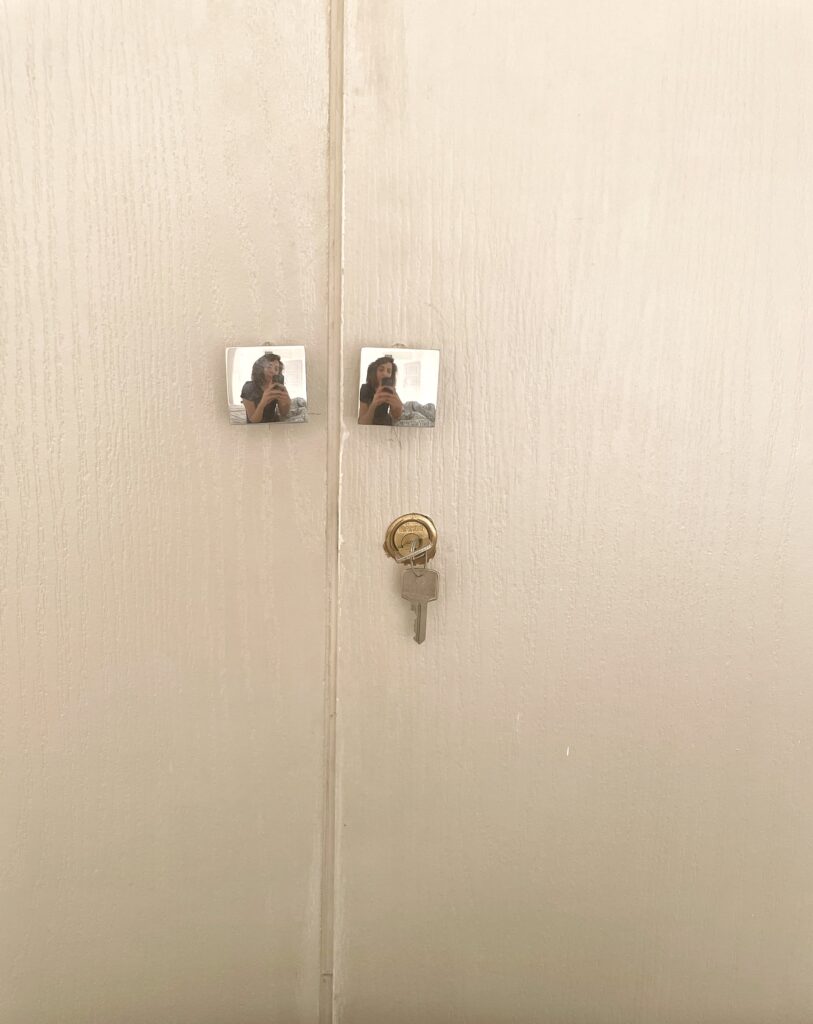
The story is fresh. I still feel the pain and temperature inside my chest. I feel like I cannot breathe; I feel like I am the loneliest person in the world, walking in the coldest streets and crying. At this moment, I feel I cannot do anything. However, I have to go to work; I must be responsible while shattering apart because of my “unacceptable” pain. The pain of making a complaint and not being heard. I was not being understood. My pain was not valid in the world. It was not acceptable. Someone in the world decided that I was not worthy of being heard. This is too much. This fardel on my shoulders, this judgmental voice in my head, this little crying girl in my chest, and me on my way to work. This is too much.
These last lines were based on a true story. I wrote them as I was freezing on my way to work. I was very late and knew that my boss would not be happy. However, I could not help it. The pain that I was experiencing was TOO MUCH that I had to sit somewhere and write those words. I needed to be heard. I wanted someone to tell me that I am not insane. But, I was too ashamed to talk about it simultaneously.
This happens every time. Whenever I decide to listen to the voice in my head that whispers, “it is not ok, do something.” it happens every damn time that I want to stand for myself. Nevertheless, it is not easy; First, I have to struggle with a roof of glass pressing on me: How to describe/share/value a complaint when you cannot make one? How do you let yourself feel your feeling when you know that you are being judged. I constantly have to have conversations in my head with myself to realize, “am I right to be uncomfortable in this situation “?
And this too much. It is like I am constantly defending myself in a court in my head. I have to think all the time. This condition has a name, and this is an actual mental Problem: overthinking. “Overthinking is when you dwell or worry about the same thought repeatedly. People who overthink can be paralyzed by their worries and struggle to make decisions or take action. Overthinking can be caused by ̶ and can contribute to ̶ depression, anxiety, and other mental health disorders”. And then I have to struggle with FEAR. I feel fear all the time. I am scared that I am missing real-life experiences. I am rarely present in the moment. I am not there. So when do I get to live my moment? There is always a transparent wall, a gap between me and others. Now, this is even more critical: I am a foreigner here. I do
everything that every foreigner needs to do, learn, and cope with. However, I have to do them twice because half of my mind is always trapped.
And now, here the next question comes: How to make a complaint ( give birth to it, make it exists) when you cannot do anything about it? It feels like my creature ( complaint) is eating me alive. the guilt hits again: there is always worse. Basic standards suddenly feel like a privilege.
Is it even my right to make a complaint?
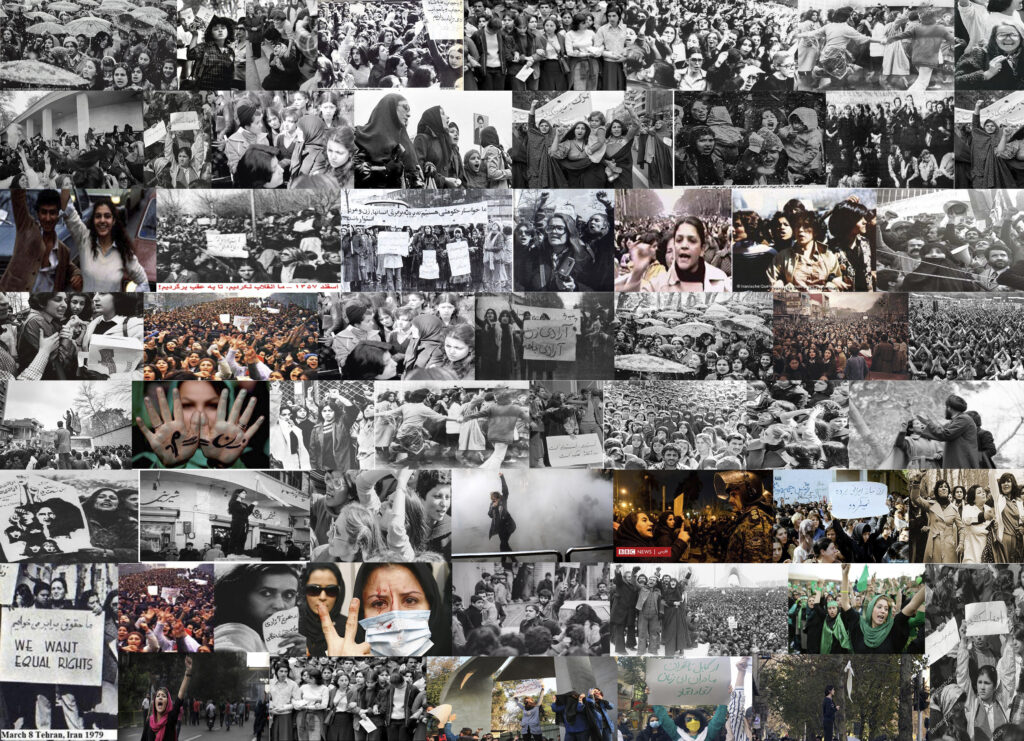

Having a heart-to-heart with a bartender is a common trope in pop culture. Sometimes the bartender is funny and cracks jokes about his customers while never losing touch with his sensitive side and really listening when needed like in Ted Danson’s character in Cheers (1982). Sometimes the bartender is a silent character that listens attentively to his customers but is also a street fighter vigilante like in Mute (2018). I even had a meaningful conversation with a barman just yesterday! It might be the after-hours, smokey and poorly lit ambience of bars that lends itself for this kind of intimate exchanges between strangers.
I was too, once upon a time, a bartender at a hotel bar having a meaningful conversation with one of my customers. It was 2 pm on a Tuesday afternoon, I had just opened the bar and in comes one of the hotel’s guests. She asked for the menu but ended up ordering a beer. She didn’t speak any Spanish so I saw this as a good opportunity to dust off my english speaking skills which I had not used in quite some time.
She told me her name was Allison and that she was on holiday with her family from California. She told me she was finishing her bachelor in South asian studies but she was having trouble with her thesis. She said it was because of her advisor, a Prof. Wentworth of UC Berkley. She told me about his unwanted sexual advances towards her via email and in real life and how she was taking legal action against him for sexual harrasment. She also told me he was a very powerful figure in the tight knit academic community of asian studies and having him as an enemy had made her advancing in her career close to impossible. At the end of our conversation she told me she was going to change her course of study even though she just needed to to write her bachelor thesis to graduate.
This was a pretty intense conversation to be having before nighttime and I didn’t really know if I should keep pushing the subject because although she was being very open about it and I was really interested in the story I didn’t know how to react to this. After my shift I googled her name and this story by The Guardian came up.
In one of my previous posts I scratched the surface on Sarah Ahmed’s concept of the feminist ear. I posed a few questions about if a man can legitimately use (or be) the feminist ear. This is not yet clear to me but I guess just listening when someone tells you a story like this, will do for now.
2 – materializing the anger
choose your favorite pillow.
position your pillow in your lap, comfortably.
be kind and lovable to your favorite pillow. feel it. hug it.
slowly move your face close to the pillow, until it is completely touching its surface.
start pronouncing the letter A continuously, initially low, and increase the volume gradually. You can stop to breathe when you are out of breath, and you can restart from the volume level you stopped. Scream as loud as you can in your favorite pillow.
stop.
position your ear immediately in the same pillow.
listen to the echo.
breathe.
1 – self-psychoanalysis session
find a comfortable, safe place, where you can lay down cozily with no fear of being observed, heard or judged.
let yourself talk non-stop about your feelings regarding this complaint.
you may find resistance in your voice in the beginning.
remind yourself you are safe.
during the process, some tingling in the hands and legs may happen. It will pass.
If tears comes out of your eyes, let them roll.
If anger runs through your body, let it pass by.
if laugh comes, open your mouth.
stay in the exercise for 45 minutes.
breathe.
I am a woman.
I was a girl.
And yes, I have been abused too.
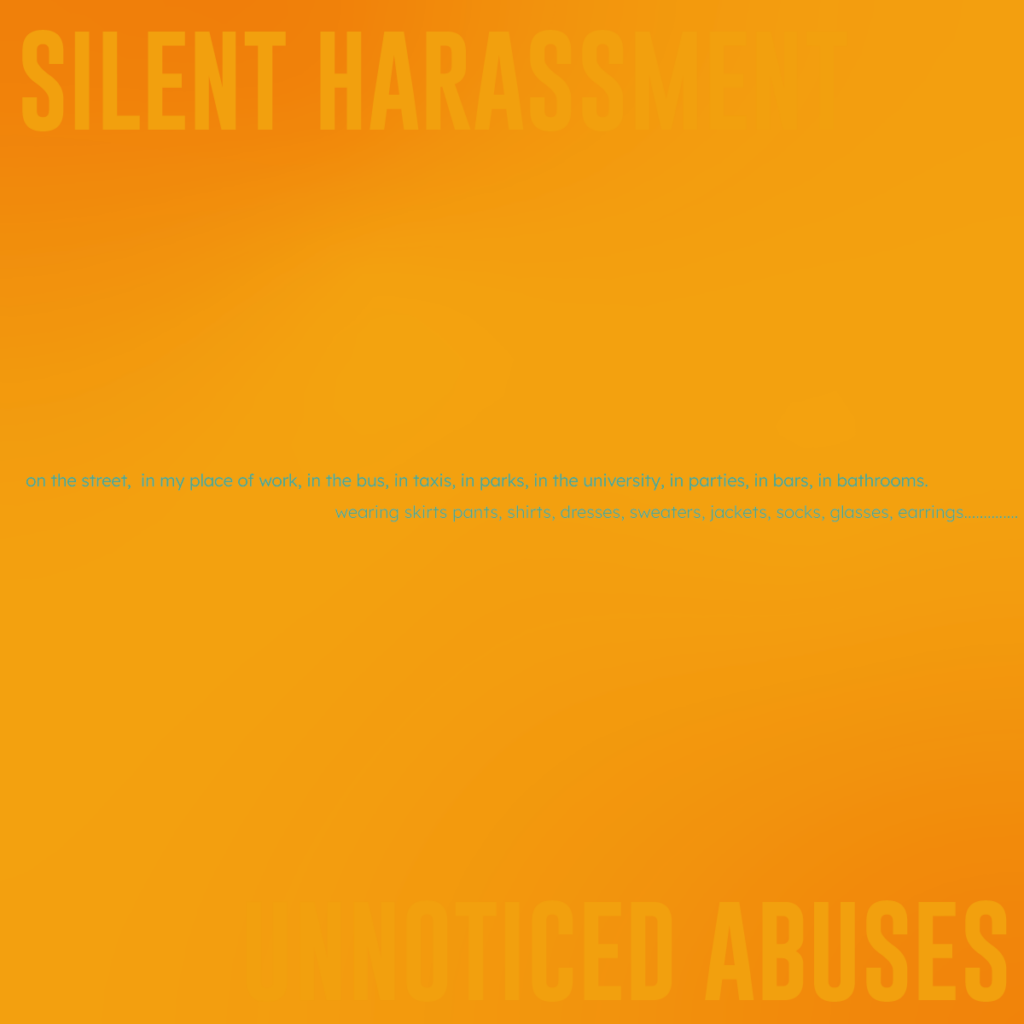
He convinced me to take off the top of my dress.
He was an Art student, and I hadn’t finished high school.
He told me he wanted to do a portrait of me.
He saw me; he caressed me.
At that time, I didn’t understand what it was like to even give my consent.
I felt guilty for a while.
BUT HE WAS WRONG, NOT ME.

Fatphobia is defined as a pathological fear of fatness. “A hatred of big bodies.” Pointing them “as lazy, and unintelligent, or disgusting,” says Mary Himmelstein, Ph.D., an assistant professor at Kent State University who studies how weight stigma affects people’s health.1
Why do we believe we have the right to judge the bodies of others?
“What makes us attractive, successful, and healthy?”2
Why do I need a gap between my legs or a flat belly to feel enough?
Like many other ways of discrimination, Fatphobia goes unnoticed because it is structural and systemic. Comments such as or are as violent as or and can be heard in different contexts, from children’s schools, to work and academic environments. And each day most common in Social media.




Mesa Mixta is a project created by the Colombian Artist YourDough (Edison Jimenez) in 2020. The project arises from the artist’s interest in the psychosocial implications of fatphobia, namely in Latinamerica. It was born to promote dialogues about fatness and build support networks for people who have suffered this kind of discrimination. Each version of the project has a Latin American women illustrator to promote their work and reaffirm a queer position, which I will discuss later.
I witnessed how Edison conducted the whole conversation by listening to people’s experiences during a couple of meetings I had the opportunity to attend. Now I cannot stop thinking about him as the Feminist Ear proposed by Sarah Ahmed in her book Complaint! He created a safe space for people to complain about being harassed and bullied because of their weight. At those sessions, I heard many difficult and painful stories. They used to be related to sexual violence in childhood or adolescence. Others came from toxic family relationships. My account was more related to trying to fit in those beauty ideas imposed for other girls in the school. These stories gave rise to physical and mental health problems connected to understanding one’s body and feeding, reaching in many cases to social anxiety, depression, and eating disorders.
Sarah Ahmed said, “Words carry a charge; you can end up being made to feel that you are the problem, that the problem is you.”3 and people who attended Mesa Mixta sessions agreed with that. They were aware that most of the problems related to their bodies started when someone called them pejorative expressions associated with the size of their bodies.
The real problem with Fatphobia is that it is deeply rooted in the collective unconscious. I would say this has not always been like this. Being fat was considered healthy and prosperous in the past. Now is the opposite because the market mediates bodies. Capitalism has changed human consumption habits. Nowadays, rich people can consume “fit” and “healthy” food meanwhile “the most accessible and affordable options [which] are calorie-dense and processed”4 are relegated to the lower classes.
In that way, fatphobia is connected with the Intersectional feminism concept coined by “Kimberlé Crenshaw, an American law professor who explained it as “a prism for seeing the way in which various forms of inequality often operate together and exacerbate each other.”5 Consequently, people of color, as well as women and other marginalized individuals with large bodies “face dual stigmatization“6 (Virgie Tovar) and become more accessible and vulnerable targets of discrimination.
Defined by himself as fat and queer Latin American, Edi proposes Mesa Mixta within the context of intersectional feminism as a place to attack fatphobia and another kind of bias.


In beginning to explore Sara Ahmed’s book, »Complaint!« I decided to take a practical attempt: I interviewed two friends about their experiences with complaints and the feelings and thoughts associated with them. Although I did not know how the conversation would turn out, as I intentionally left the questions open, I saw it as an interesting approach to use the “feminist ear” as a research method, as Ahmed did in the development process of »Complaint!« (cf. Ahmed 2021: 8). The following conversation took place in a cozy surrounding on a sunny afternoon between three friends.
J: Did you ever complain about something?
T: Yeah. In private life or to some organization or agency?
J: Everything is included in this question – whatever you complained about. What did you do? Why did you complain? And where did you complain?
T: I regularly complain about stuff that I don’t like. But before I complain, I do a long analysis in my head. Why does it bother me? Does it bother only me or bother other people as well? And then when I come to the conclusion that it’s generally not accepted – such a behavior is not accepted – I’m saying it to the person. But not directly, I start giving hints: “Maybe there, if we do this way, this way or another way…” I’m complaining not directly but indirectly.
J: In such situations, what were you complaining about, for example?
T: Recently, I’ve been complaining about, for example, where we put the shopping bags, if we do the dishes right after we cooked, or if we tidy up the bed after we wake up, or if the table is full of stuff like I complain that it’s not how it’s supposed to be. There is no structure and no organization.
J: Besides your personal life, have you ever complained to an organization?
T: Recently, I didn’t complain about an organization related topic I think – at least in the last few months.
J: Okay. And before?
T: And before….I need one minute to think about it.
J: Yes, no worries.
T: I am gonna check my emails – maybe.
J: So R, in the meantime, maybe you could tell me a little bit about your complaint history.
R: Actually, when T was giving her answers I was thinking like, I seem to complain a lot about things. But that’s because I’m really opinionated. I would say, not so much in my private life, but a few examples came to my mind. I think when I was 15, or 16, or something, I complained to a
radio station because they were always playing the song, “Can you blow my whistle, baby?”. It was the first time I understood the lyrics, and I was like: “Why do you play this all the time? Little kids are listening to this!” And now I’m like: “Yeah, but there is also sexual freedom.” Recently I complained to my employer about gendering in German. I read an article that you should do it with a star and not with a colon, because that’s easier to read for people who use text to speech programs, as it’s easier to process for such programs. So blind people can better understand gendered language, if it’s written in a certain way. And so I asked: “Where can I complain about this to our company, so we can change it in the policy of our community and outside communication?” And then, like in my private life, I like to complain as like “pretend complaining”. If I feel a certain way, it’s good to just complain about stuff a little bit. Let a little bit of grumpiness out. And just be like: “I hate that I have to go there”. Even if you like to go there – maybe you made an appointment with a friend or something – and then you’re like: “Why do I have to go? I don’t even want to go anymore.” You’ve complained and after you’ve complained you’re like: “Okay, now I can go, because now it’s fine somehow.”
J: So, to some extent complaining has the function to just get pressure out of your system in this case?
R: Yes.
J: Okay. Let’s take a step back to the case you mentioned before, the complaint about the gendering at your workplace. What was the reaction to your complaint?
R: At first it was kind of a question actually that I asked in our pride network. I got a lot of answers in the intranet that were positive and reactions like “Yeah, let’s do that, it’s good”. And I had also asked for official marketing contacts from the headquarter – so people gave me names. But after that, after I came out of that bubble of people who understood and went into the corporate organisation, the reactions were more like: “Oh, you have to talk to this person, because we’re not responsible for that”. And it was kind of like, getting pushed to the next person and to the next person, because everybody said they’re not responsible and that their department is not where the decision is made. So it hasn’t really ended anywhere. I haven’t really found the person to talk to. It seems like they try to avoid it or try to avoid make a definite decision.
J: How does this make you feel?
R: Cynical, I guess, because it’s kind of what I thought would happen, but I thought I’m just gonna do it anyway. Because? Yeah, I don’t know. I already thought it wasn’t gonna go far, but I also thought, if nobody says anything, they won’t know that people are looking out for that or that this subject is important.
J: Okay, I think I understand.
J: T, did you find something in your email account?
T: No, I didn’t find anything and I tried to remember the last year. But it seems like I didn’t complain to any organizations or something. Unfortunately – maybe.
R: I know that you did complain to an organisation. You complained to your internet provider, because it didn’t work or something? Or didn’t you?
T: Oh, yeah. Yes, it was V. The internet didn’t work and then I had to call them. I explained that we had no internet the last two weeks. Sometimes we had internet, sometimes we didn’t have internet for many hours, and it cannot work this way. And then they said: “Yes, but we cannot do anything.” And then I asked: “Okay, then can you please give me free data, like 50 gigabytes of data, so that I can work”. And then the person said: “No, I cannot do it. It’s not working this way.” And I said: “Yes, but I have a contract with you and now it’s not working. Please let me talk to your boss.” And the person said: “No, I cannot do it. I’m so sorry.” And then at some point, I got mad. And I just said: “Okay, thank you”, and then I hung up, because it didn’t lead anywhere. And I just felt mad.
J: In the end, you didn’t have a solution for your problem?
T: Yeah, I didn’t have a solution. But luckily, it just worked the next day – somehow. J: In general, what does complaining mean to you?
T: Lately it is like, to take out your uncomfortable feeling from the inside out, and then just let the spirit feel free. Yes. And also sometimes, complaining doesn’t have any meaning to me, if after I let it out, I don’t feel better. I know I will feel better, if there will be people who listen to me and then develop a solution, or help me to find a solution by myself. Then, it’s a useful complaint. Yes – there are two types of complaint: Useful complaint and useless complaint. Useless complaining is just letting your complaint out loud and you just bother the people in front of you. You are not helping them and you’re not helping yourself as well.
J: And what about you, R?
R: I think it also depends on the type of complaint I’m doing. If I’m doing it playfully, or like to let off steam, it can sometimes mean kind of a connection. I have a work best friend and we like to complain about work. We send memes back and forth like “Work sucks” and “I’m so tired”. And like, you know, the Friday memes and the Monday memes and the Wednesday memes. So complaining can also be like a friendship activity, I guess. If a group of people complain about the same things, it’s also kind of unifying sometimes. That can be in a fun way unifying or also in a serious way unifying. Because activism is kind of complaining about something, but with more people and like a demonstration is also complaining, I guess. For me that means community sometimes, but it also means vulnerability. Because if you complain about something that is important to you, and you complain about it, then you’re giving away something of yourself, and you kind of give it to other people, you’re being vulnerable. And then there’s always the risk that by complaining, you kind of make it worse for yourself or that they know that that’s a sore point for you and you kind of have to trust someone to be good with that, to treat it well, and to not use it for something.
J: As a last question: How does talking about complaints make you feel? How is it to talk about your history of complaints and about complaining in general?
R: I feel good about it. But if I think about activism, right now, for me, it’s exhausting to complain, sometimes. Because it’s always like a fight. You have to put some resources into it to have a stance on something and then defend that. If you complain, then you have to sit behind the complaint and defend it against other arguments, for example. Although, talking about what I’ve done in the past, I feel good, because I feel like it’s always kind of an expression of your
boundaries, and it feels good to set them. Even if they are not always respected, at least you did something for yourself. So that’s good.
T: I personally don’t like the feeling of complaining: I mean, when I complain, I don’t like how I feel. But then I feel good when I talk about the times when I was complaining, because obviously it brought me some improvements and results. So talking about the times when I complained is good, but I don’t like the process of complaining itself. I try not to do it so much. But I also realized that sometimes it helps. So I’m just having my inner fights all the time, but it’s fine. That’s me.
J: Thank you so much for sharing your thoughts and stories with me.
Reflecting on my friends’ thoughts, I realized that complaining as a practice is intuitively not always related to problems and discrimination within organizations or structures of power. As R explained, complaining as a communication tool can be playful and helps to investigate personal boundaries and let off steam.
The picture of letting off steam reminds me of Ahmeds’ illustration of the “liquid that spills out from a container” (Ahmed 2021: 18), which is a much more intense and painful description. For me this shows how making a complaint that is personally important to the complainant is connected to vulnerability and making something extremely personal visible in an unprotected space.
I was saddened when T and R explained that before they filed a complaint with an institution and thus left the protected space, they already assumed that their complaint would not lead anywhere or bring systemic change. Both have experienced not being heard or even being put off and sent from one person to another.
As Ahmed states “hearing complaints can also be how you learn how complaints are not heard” (Ahmed 2021: 6). That was perhaps the most present thought in my mind, after the conversation. Using a “feminist ear” made me realize how people in my nearest surrounding are being put off and not heard when complaining about personally important problems and discrimination.
Questions that stick in my head are: What are people’s motives for ignoring complainants’ voices? And how are those related to or built upon institutional mechanisms? Was, for example, T turned down for policy reasons by her internet provider? And why did nobody from the corporate team help R with her attempt to advocate for greater accessibility?
References:
Ahmed, Sara. Complaint!, New York, USA: Duke University Press, 2021.
When all my pores fill in with the overwhelming present, I must commit suicide. Sensational suicide is existing as a metaphor, and therefore, it is fully justified. It helps to create, connect, kill, resemble, dissolve, renew, build, and comprehend the Self within the Other. My writings always juxtapose the facts and fiction, sometimes corresponding to reality, other times deviating from it.
There is a war. There has always been one, less or more physical. Some are silently perceived by this egocentric continent, while others are loud, more disturbing, close, extreme. My kids are the same during the war, everywhere – sobbing, trying to accept, escape and understand why is somebody taking away their toys suddenly. The same that I asked for 23 years ago. NATO bombarded Belgrade when I was at the age of 3.
My war experience smells like basement’s strawberry jam, mixed with moldy concrete and the unfamiliar crowd of people that happen to be in the same shelter as us. It pictures a lot of Roma kids occupying one metal bed with a flower pattern. It sounds like the siren that burns the ears while alarming the state of emergency. At that time very young uncle was on the field, ready to protect the county. My other parents, the grand ones, decided to stay in their house and expose instead of hiding from the potential bombing. They were feeding me, my mama, and a big Roma family in the basement with the tones of jam and fresh-baked wheat bread. My jelly fingers could not understand where the toys are and why is grandma’s face pale most of the time. Still, I was pretty calm in my mama’s lap imitating the siren as if it is the jingle from the film we are all having a role in.
Today I was bitten by the rat with the name Pandora. Impressed by her gentle, so human-like hands and the way she eats her rat food, I indeliberately attacked her privacy and she showed me my place. This afternoon is sitting alone in front of a Czech Catholic church breathing the air of the second country with the biggest number of non-believers. Tonight I am in a small underground bar almost 50m beyond the surface, surrounded by a language that sounds like my mother tongue without a chance to understand it. I am slowly and deliberately disappearing in these people’s faces and my own beer glass. I can transform into anything I want to.
Initials N.K., the jar persona, multiple identities, the empty-faced person seeing for the context to apply to her unformed reality. Seeking for nothing, anything and nobody. N.K., the traveler, the one that never belongs, just passes through, grabs, and loves, insanely and intensely living the life that is happening at the moment. N.K. the future, memories, thoughts, and occasionally actions.
Today is the war again. The war I can not do anything about. The one far away physically, moreover far beyond mine or any individual’s power. Today I am going away from the known, my everyday life due to the overwhelming pile that attacked my heart, my brain, and my soul and escaping in my manner, to myself. In my suitcase, there is a big rounded rye bread called Doppelmisch, packed together with the jar of plum jam I aimed to give to the person who will land me the couch in Prague for a couple of nights. The person I never met in my life. Born in Delhi, living in the Czech Republic. The escape has to be official, glamorous, thought throughout. It can not require already known. Therefore, the gift has to be current fact – Serbian jam and German bread. Moreover, in case of an emergency, I am fully prepared.
Once back in the past, the Czech Republic experienced the same terror from the Russian army as Ukraine does now. Tanks entered the city of Prague aiming to liberate the people that did not need and wanted to be liberated. A student burned his body as a statement. 15 more students repeated the same.
My body like this bread can be cut so easily, with one simple stab in the stomach or directly to the heart. It is so easy to die. So easy to disappear. Like a worm, somebody just steps on your body and decides that you are not part of this film anymore. You become a stain. A stain of jam, belonging to the society that won’t bother scooping you up. In case of the war, you are not asked. In case of emergency, try to survive. To exist, one must multiply.
Ústi nad Labem hl. n., the border
back & forth
März 2022