Categories
book

therapeutical steps for a self-care while going through a complaining process (of any nature) 6/6

6 – repair session

find a piece of paper.

ripe it off in 4 to 6 pieces.*

display the pieces in a flat surface. 

reorganize it in the original shape.

glue them back with band-aids.

breathe.

*(not recommendable to rip it in more parts than the suggested. the angry might increase.)

Categories
book

therapeutical steps for a self-care while going through a complaining process (of any nature) 5/6

5 – exploding the cause of complaint

find a plastic bag.

whisper the cause of your complaint inside the bag.

fill in the remaining space by blowing air inside.

close the bag quickly, so the air and the cause of your complaint don’t come back to circulate.

allow the cause of your complaint to suffocate a bit inside the bag.

explode the bag with your hand. 

breathe.

Categories
book

therapeutical steps for a self-care while going through a complaining process (of any nature) 4/6

4 – dance the feeling

find a space big enough for you to open both of your arms and legs in your entire circumference. 

make a playlist with the most energetic musics according to your preferences, with duration of more or less 15 minutes. 

wear headphones or turn up the music as loud as you can in the speaker, to isolate other noises from the ambience, inside and outside your head. 

close your eyes.

play the music.

dance as hard as you can, moving all your members, from feet toes to hair in the top of your head. 

kicks and punches in the air are very effective. your moving hips also don’t lie.

when the music stops, the exercise is done.

breathe. 

Categories
book

therapeutical steps for a self-care while going through a complaining process (of any nature) 3/6

3 – negotiating affection

find a cat or a dog that feels ok with you touching their belly.*

touch their belly softly, in circular moves. 

let the tenderness invades your heart. 

breathe.

*(you might get scratched or bitten. it is common, but you will be alright.)

Categories
book

The one time I tried to make a complaint

It was the Summer of 2020. Sad girl summer. I had been saving over a year to update my old digital camera. I could not really afford a new one but I had seen some pretty decent ones over at Ebay Kleinanzeigen.

When I first found that website, it blew my mind. In Colombia that would never work. There‘s also ebay there and other auction websites but all transactions always go thru a middleman that gets the money and does not give it to the seller unless he delivers the goods. This classified ads website, where people list items to sell and then actually post them after getting the money without big brother micromanaging every transaction can only work in the global north, where people actually follow thru, or so I thought.

After a few days of looking I found a good camera that was a bit cheaper than the rest of the cameras offered, not that much cheaper so I thought nothing of it. First red flag. The seller looked legitimate. Account created 5 years before, good reviews, several items posted. I contacted him asking about the camera. He said he lived in Leipzig and could post the camera to me, no problem. Signed Dirk Constantin. We even spoke briefly on the phone and he sounded like any other guy. He accepted Paypal but only with this option called friends and family which is like a direct deposit. Friends and Family has no purchase insurance. Second red flag. I transferred him the money and 5 min later he took down all other items he had for sale. Final red flag. I started panicking and realized I had made a huge mistake. I tried calling him again. No response. I wrote to him again. No response. The next day I knew i was not going to get the camera and had wasted my savings on the most stupid con imaginable.

I had to tell someone. I reported him to the admins at ebay and wanted to get his personal data if possible but they told me that information was confidential. I called the bank and they said they couldnt reverse the transaction. I called pay pal and told me to contact the bank which I did, again, and they said I should call pay pal. The most boring game of ping pong. 

My German is very basic so having to make these phone calls and explaining my situation to the incorporeal corporate rep on the other side of the line was quite an ordeal in itself. I would just sometimes default to one of the questions I dread asking the most: Do you speak english? I could just hear so many „Wie Bitte?“ In a single day.

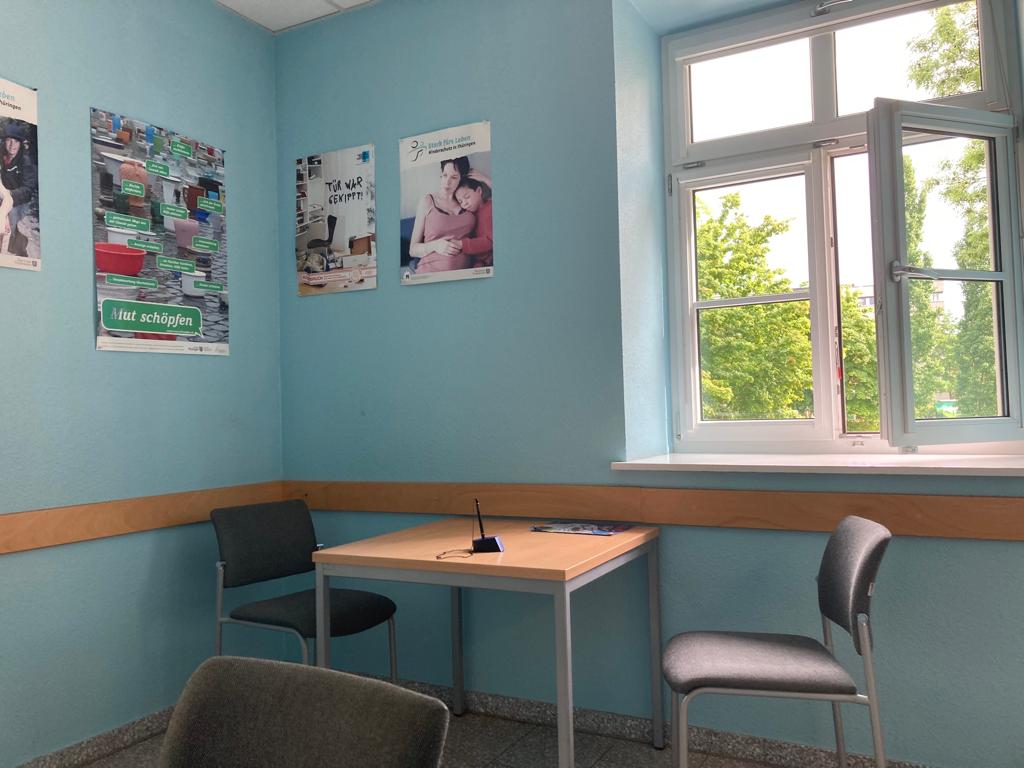
My wife advised me to go talk to the police. They do their job here in Germany, she said. I went to the police station behind the atrium and had to wait a few minutes until someone came to the front desk. I once again explained my situation and she told me to wait in a little room that had a window to the street. This was such an odd room. I inspected it thoroughly as I was left there waiting for 45 minutes. I read all the posters on the walls, checked the wanted list on a cork board, looked through some outdated magazines with scribbles on them. I imagined other people waiting in that same room before me. Also bored, also waiting, also in for a little disappointment.

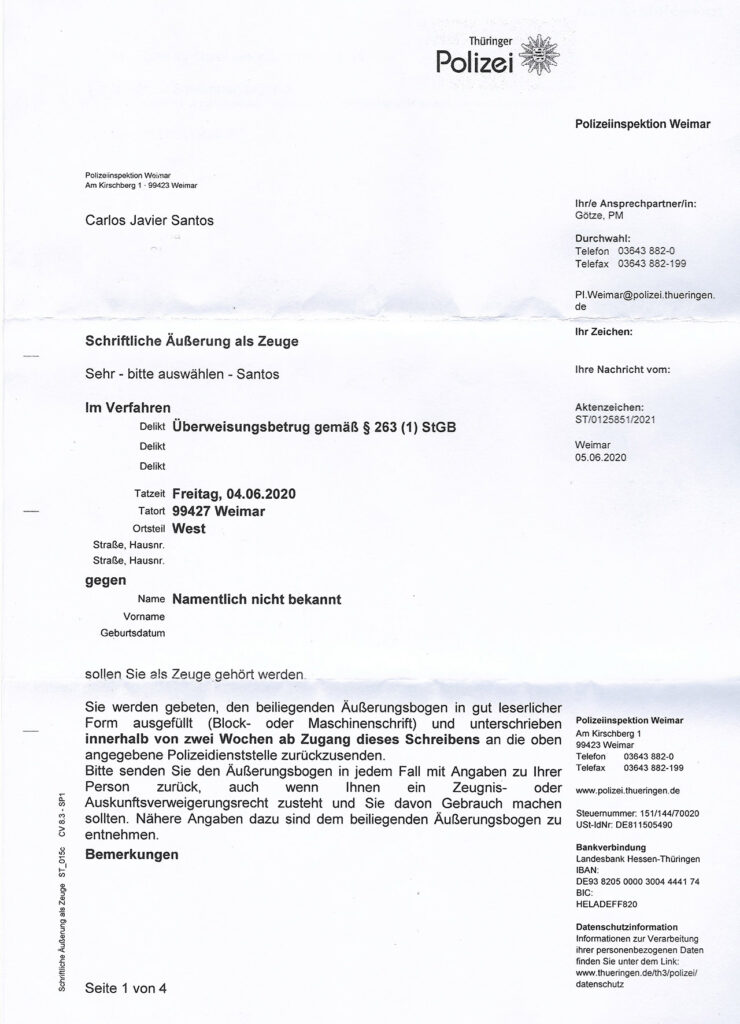
A police officer arrived in the room and asked me what my problem was. I explained everything again the best I could. As the story progressed he looked more and more annoyed. He lowball told me I was just too gullible and that it was basically my fault for not being safe when buying things over the internet. Fair but not really what I was expecting. The officer then went away for a few minutes and when he came back he handed me a letter with the Bundespolizei letterhead and told me to write down all of the details i had just told him. He said I could just bring the written statement the next day. I was cleaning my desk drawer last week and found the letter, still unfinished. 

Sarah Ahmed writes in Complaint!  „Complaints often end up in filing cabinets or dustbins“. I just  didn’t realize that sometimes they belong to the person complaining.

Categories
book

Tonight no poetry will serve

I would like to share this poem from poetess Adrienne Rich, whom I discovered while researching about the artist I chose for the essay writing for this course, Alfredo Jaar. He takes her as inspiration for titling one of his exhibition´s at Kiasma Museum in Helsinki, Finland in 2014.

Tonight No Poetry Will Serve, (2007) Adrienne Rich

Saw you walking barefoot
taking a long look
at the new moon’s eyelid

later spread
sleep-fallen, naked in your dark hair
asleep but not oblivious
of the unslept unsleeping
elsewhere

Tonight I think
no poetry
will serve

Syntax of rendition:

verb pilots the plane
adverb modifies action

verb force-feeds noun
submerges the subject
noun is choking
verb disgraced goes on doing

now diagram the sentence

Adrienne Rich, Baltimore USA (1929-2012), Poetess, writer and activist


When a person is deprived for their rights, is art and poetry ways in which is possible to mend irreparable wounds?


Categories
book

Too shy to say, but :

Categories
book

Just listen,

You don’t need words…

Categories
book

I was Here

Hello. I cooked the dinner. I dusted the house, cleaned the windows. 
Hello. I took care of your plants. Washed your clothes. Bought your favorite cake. Can you smell that? This is your coffee. I collected your letters, put them on your desk; next to those beautiful flowers that you didn’t buy for me.
Hello. I was here. I lived here. Can you see that hair strand on the pillow? That’s mine. But you don’t remember. can you see that pack of cigarettes? That’s mine. But you don’t remember. 
I am leaving today. You know my departure time. You know my flight number. You will look at your watch, then at the sky. You will let me be gone in silence. I am the plaintiff. You didn’t recognize my My departure, Therefore it is so hard to “be” somewhere else. I deserved that, you withheld it from me. I am complaining, you still don’t hear me.
Categories
book chapter complaints ideas

Complaint activism: A self reflection

Thoughts on myself and my complaint practise

I am young, white and was born into a middle-class family in the north of Germany. Based on these facts alone, I pass many marking systems, probably barely registering that they exist. For example, I started my studies right after school and even got a scholarship, I can go into a regular drugstore and find make-up that matches my skin tone and I can travel around Europe without even being asked for my passport. 

To me, this sounds like the archetype of a person that could benefit from »white liberal feminism« which Sara Ahmed describes as a state “when career advancement for individual women is dependent on the extent to which they show they are willing not to address institutional problems” (Ahmed 2021: 254). Scanning my life, I see traces of »silence as promotion« – I have to admit it, although I am not proud of it. For example, I got an internship via my boyfriend’s personal, mainly male network without having to go through the company’s regular HR process. I had mixed feelings at the time: On the one hand, I really wanted to do this internship at this company, but on the other hand, it was completely against my values that no open recruitment process was taking place. I took the internship offered to me and by that I played by the rules of a mainly patriarchal system in this situation of my life, without pointing out that this system is simply not fair, especially to FLINTA*-people. 

But even if I see those traces of »white liberal feminism« in my life, I refuse to categorize myself as a »white liberal feminist«. Hearing phrases like “you as a woman have the same chances of having a career as a man of your age and position”, “gendering makes the language look ugly and I don’t see the point of it” or “to me, the women I (sexually very active man) am dating, had to many sex partners already”, I need to complain and make my position in these debates clear. No matter if it is said in a personal conversation or an institutional context and even if this might cause damage to my personal position.

In several areas of my life, I feel the need to work on the transformation of institutional and systemic practices  through complaint and activist work. I came to an interesting realization while reading the chapter »Complaint activism« (cf. Ahmed 2021: 283- 300). On an institutional level, I tend to skip the step of complaint, even if I know it exists, because I have had the experience that complaining, even as a group, doesn’t lead to a change. One specific example of this came to my mind: In my current study program we had an external lecturer who gave an extremely poorly prepared presentation that had not been updated in a long time, which used racist cultural stereotypes and animated us to reproduce them. Almost everybody in the class felt uncomfortable with that and we expressed that personally in the feedback session of each block seminar as well as in our teaching evaluations that were handed over to the faculty. At first, the responsible coordinators seemed concerned and said that they would have a clearing conversation with the lecturer and might not continue the cooperation. But in the next winter semester we found out that nothing had changed. The course was still held by this lecturer; the content was the same and even the final task was still the same. So, even with the lobby of about 30 students from the same program, we couldn’t stop the reproduction of institutional practices by our faculty. Experiencing being stopped by not being heard and the ineffectiveness of institutional complaint procedures – in this case, the ineffectiveness of about 30 teaching evaluations – made me realize that if I want to change something in the faculty, not complaint, but »slow activism«, as Ahmed puts it, is often my tool of choice.

Last summer, together with three current and former students of my program, I formed an initiative that wants to connect students with alumni of our program in order to foster knowledge transfer on contemporary and relevant topics. Since we cannot influence the agenda setting on the academic side, we encourage dialogue and discussion on important topics in a semi-institutional context. For example, we plan to invite students who are activists on diversity topics here in Weimar and give them a stage linked to our study program by doing so. As just explained, we experienced that a complaint about the official institution and its practices didn’t work, so we rather started activist work ourselves and developed paths partly linked to the institution by founding the initiative than continuing the complaint process.

Feeling inspired by Sara Ahmed’s »Complaint!«

Reading »Complaint!« by Sara Ahmed has inspired me to reflect on my complaint practice in several different ways, and I’m very glad I did. While reading the book, I recognized links to different areas of my life, like systemic tools and constructs I am working with, as well as personal topics that I elaborated on in my blog entries. For me, three implications have emerged from this process that shape my ways of thinking and acting with regards to complaints.

First, I experienced that using the »feminist ear«, as Sara Ahmed does in »Complaint!«, is a powerful tool. It creates a feeling of unity in shared experiences of complaints, even if they were stopped within institutions, and it is an option to express the complaint and get it out of your personal system. Moreover, by expressing the complaint, it can inspire others to take this as a starting point and proceed. As Ahmed explains this function of complaint: “How to help each other to get it out. What you put down, […], others can pick up” (Ahmed 2021: 298). This inspires me to talk about experiences of complaint more often and create a shared thinking space by doing so. 

Further, I have found for myself at various points in my reading that I want to cultivate a critical eye on my own privileges. On the one hand, to ensure that my actions do not reproduce institutional and systemic mechanisms of oppression and discrimination as best I can, and on the other hand, to find points of contact where I can support others in their complaint processes, building a kind of a complaint collective. 

Finally, I can say that reading »Complaint!« sharpened my perspective on complaint practices and their importance. During the reading process I realized that I was more conscious of complaints – my own as well as others.  I want to maintain this perspective and not simply have my complaints stopped in the future by institutional mechanisms or warnings expressed to me. 

References: 

Ahmed, Sara. Complaint!, New York, USA: Duke University Press, 2021.